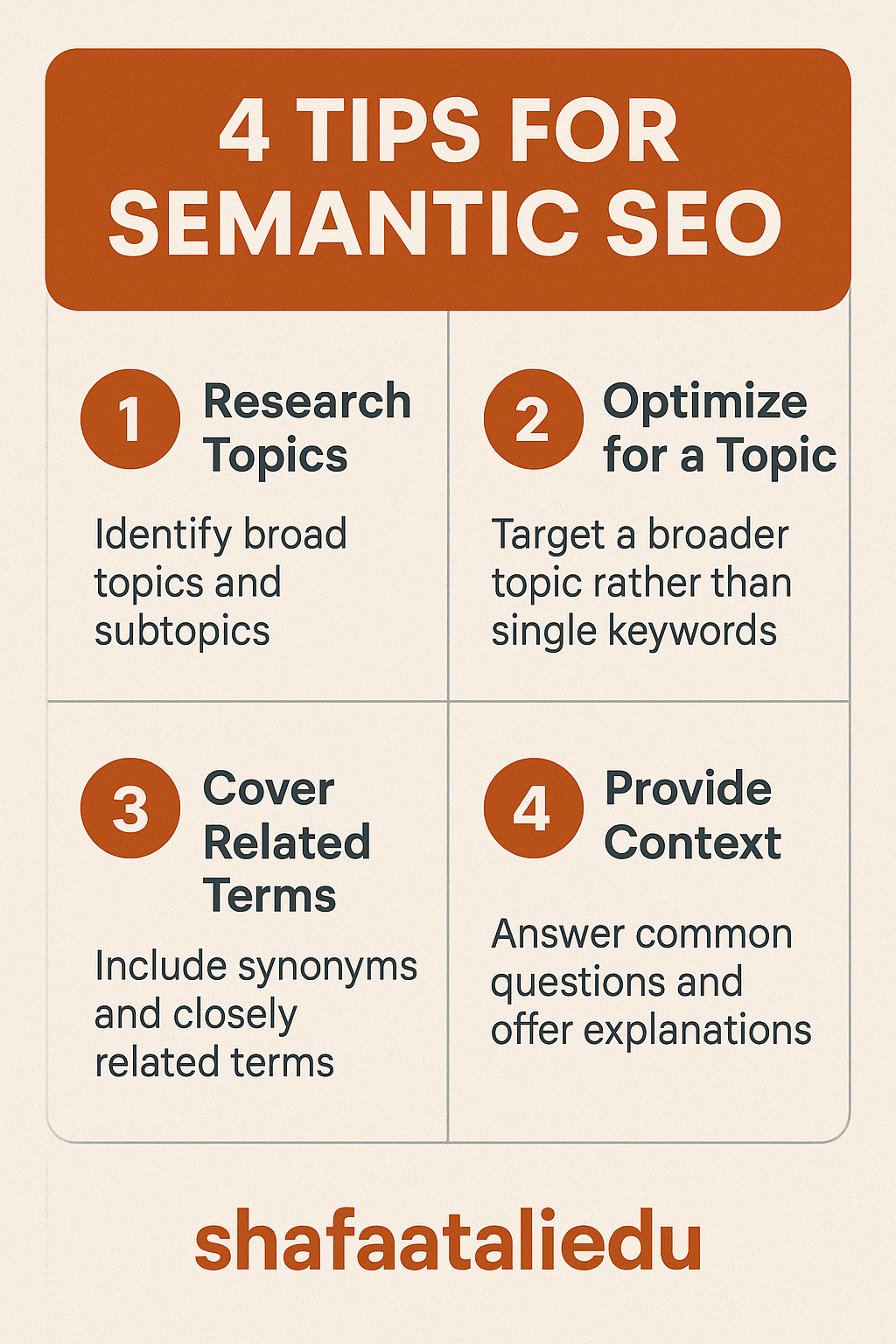
Semantic SEO is a smarter way of optimizing your content so search engines truly understand what you’re talking about—not just the keywords you’re using. Instead of stuffing articles with repeated phrases like “best coffee maker,” semantic SEO focuses on meaning and context. Think of it like having a natural conversation, rather than repeating the same words over and over.
Let’s break it down with an example. Say you’re writing a blog about “Apple.” Without context, it’s unclear if you mean the fruit or the tech company. Semantic SEO helps Google figure it out based on surrounding words like “iPhone,” “MacBook,” or “orchard” and “vitamin C.” This deeper understanding means your content gets shown to the right people.
Here’s how it works in practice:
- Use related terms: Instead of just saying “laptop,” mention “computer,” “device,” “Mac,” or “keyboard.” This tells search engines you’re covering a topic broadly and meaningfully.
- Answer questions: Include common queries like “how to clean a laptop” or “what is a good laptop for students?” These help match your content to user searches.
- Structure content clearly: Use headings, bullet points, and short paragraphs to make it easier for both readers and search engines to understand your message.
Semantic SEO is especially important today because Google’s algorithm is more advanced than ever. It wants to rank content that helps people, not just content with the “right” words.
In short, semantic SEO is about writing for humans first—and letting search engines follow. As AI and voice search grow, understanding user intent will only become more important. So the future of SEO? It’s all about being more human.

Leave a comment