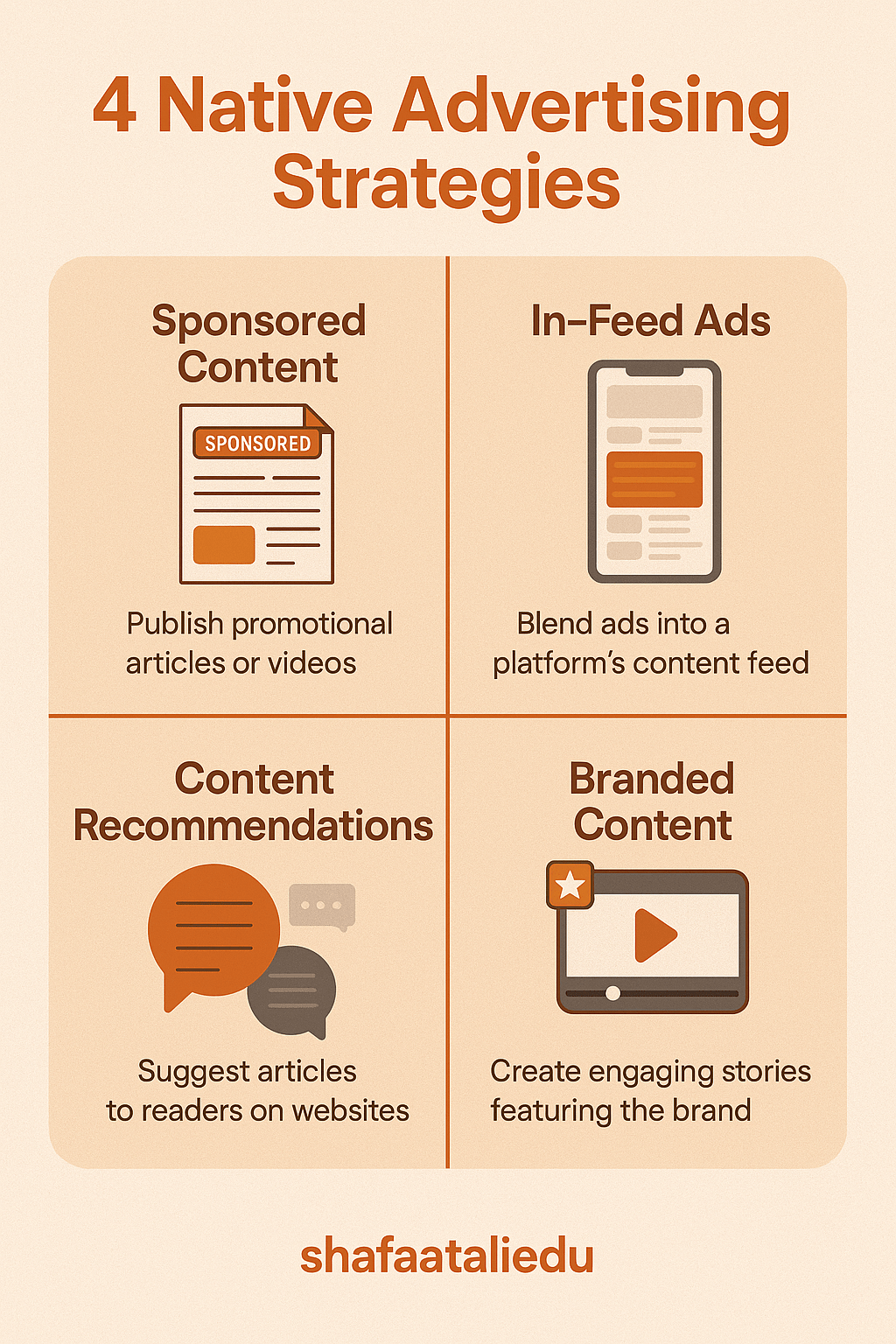
Native advertising is a type of online advertising that blends in with the content around it, making it feel natural and less like a traditional ad. Imagine you’re reading a blog post about healthy eating, and right in the middle, there’s an article titled “10 Superfoods You Should Try”—sponsored by a smoothie brand. It looks and reads like part of the blog, but it’s actually an ad. That’s native advertising in action.
Unlike pop-up ads or banner ads that interrupt your browsing experience, native ads match the style, format, and tone of the platform they appear on. They can show up as recommended articles on news sites, promoted posts on social media, or even as search results. Because they’re designed to feel like part of the content, they’re more likely to be read and engaged with.
Let’s break it down with a simple example. Say you’re scrolling through Instagram. You see a post that looks like a regular user’s photo, but it says “Sponsored” at the top. It’s from a travel company sharing vacation tips. That’s native advertising—it fits right in, but it’s paid content.
Native advertising works well because it doesn’t shout “I’m an ad!” Instead, it tells a story or offers useful information, building trust with the audience. However, it must always be labeled clearly (like “sponsored” or “paid partnership”) to stay transparent with readers.
In short, native advertising is all about making ads feel less like ads. As more people tune out traditional ads, brands are turning to native strategies to reach audiences more naturally.
As the digital world continues to evolve, expect native advertising to become even smarter—blending seamlessly into new platforms while still delivering value to both brands and readers.

Leave a comment