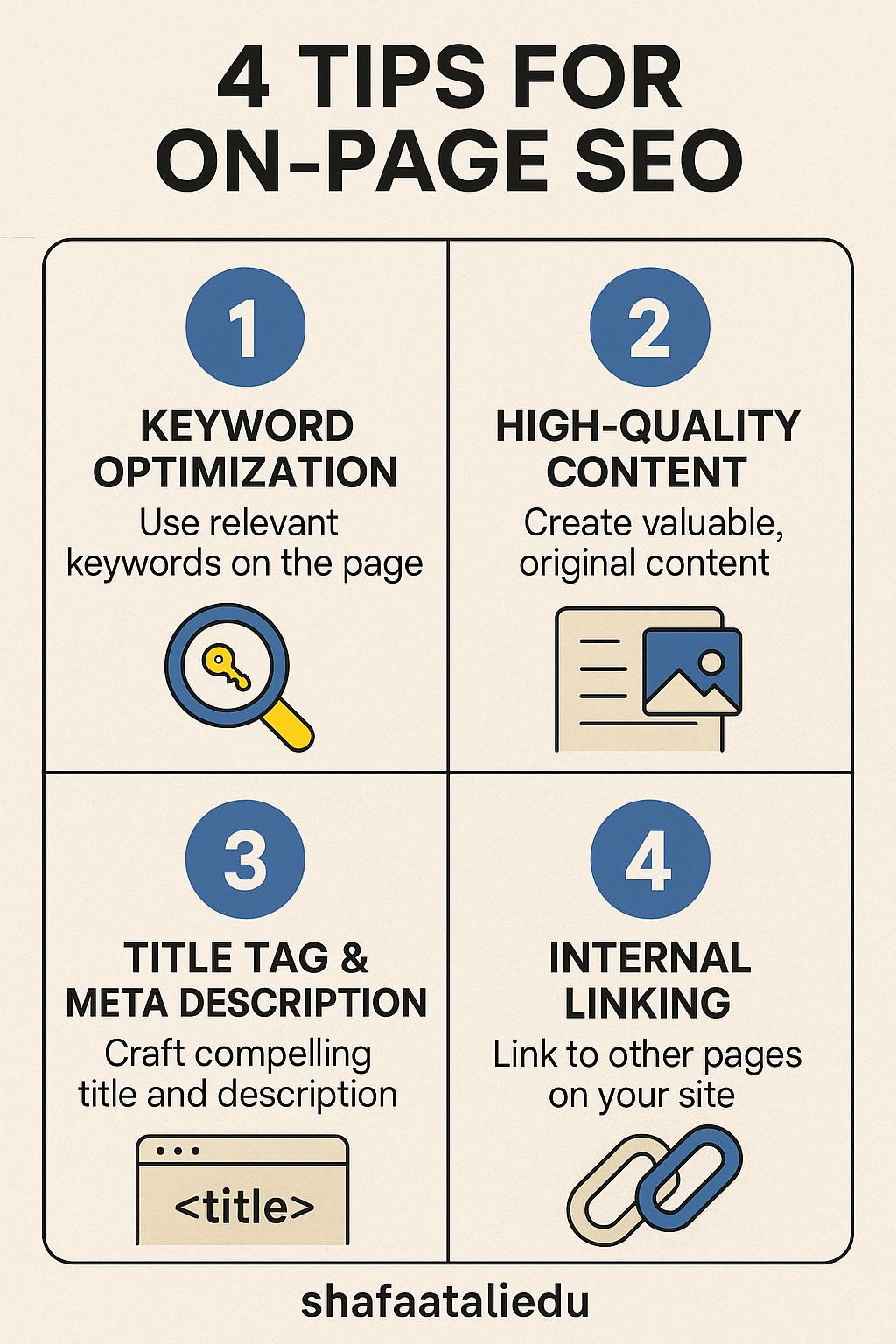
On-page SEO (Search Engine Optimization) is all about optimizing individual web pages so they rank higher on search engines like Google. Think of it like setting up a storefront—making sure your signs are clear, your shelves are tidy, and your products are easy to find. On-page SEO helps search engines and users understand what your content is about.
Let’s break it down step by step.
First, keywords are the words people type into Google. If you’re writing a blog about healthy smoothies, using terms like “easy smoothie recipes” or “healthy fruit drinks” in your title, headings, and content tells Google, “This page is about smoothies!”
Next is title tags and meta descriptions. These are the headlines and summaries that show up in search results. They should be catchy and clearly explain what your page offers. Imagine them as the cover and blurb of a book—people decide whether to click based on that!
Another key part is using headings (like H1, H2) to organize your content. It’s like writing an outline: H1 is your main topic, H2 breaks it into sections, and so on. This structure helps both readers and search engines follow your content easily.
Then there’s URL structure—short, descriptive web addresses like example.com/smoothie-recipes are easier to read and more SEO-friendly than something like example.com/page123.
Don’t forget internal linking—connecting your page to other relevant pages on your site helps users explore more, and tells search engines your site is well-organized.
Finally, image optimization, like adding alt text, makes your content accessible and helps Google understand what your images show.
In short, on-page SEO makes your site easier to read, understand, and rank. As search engines evolve, focusing on user experience through strong on-page SEO will only become more important.

Leave a comment