Imagine you’ve opened a bakery in your town. You make the best cupcakes, but if no one knows your shop exists, they won’t come in, right? That’s where SEO comes in—but for websites.
SEO stands for Search Engine Optimization. It’s a set of strategies used to help websites appear higher in search engine results (like Google) when people look for something. The higher you rank, the more people can find your website—just like placing your bakery on the main street instead of a hidden alley.
Let’s break it down with a simple example:
Say you write a blog about easy homemade pizza. If someone searches “how to make pizza at home,” you want your blog to pop up on the first page of Google. SEO helps make that happen by improving different parts of your content and website.
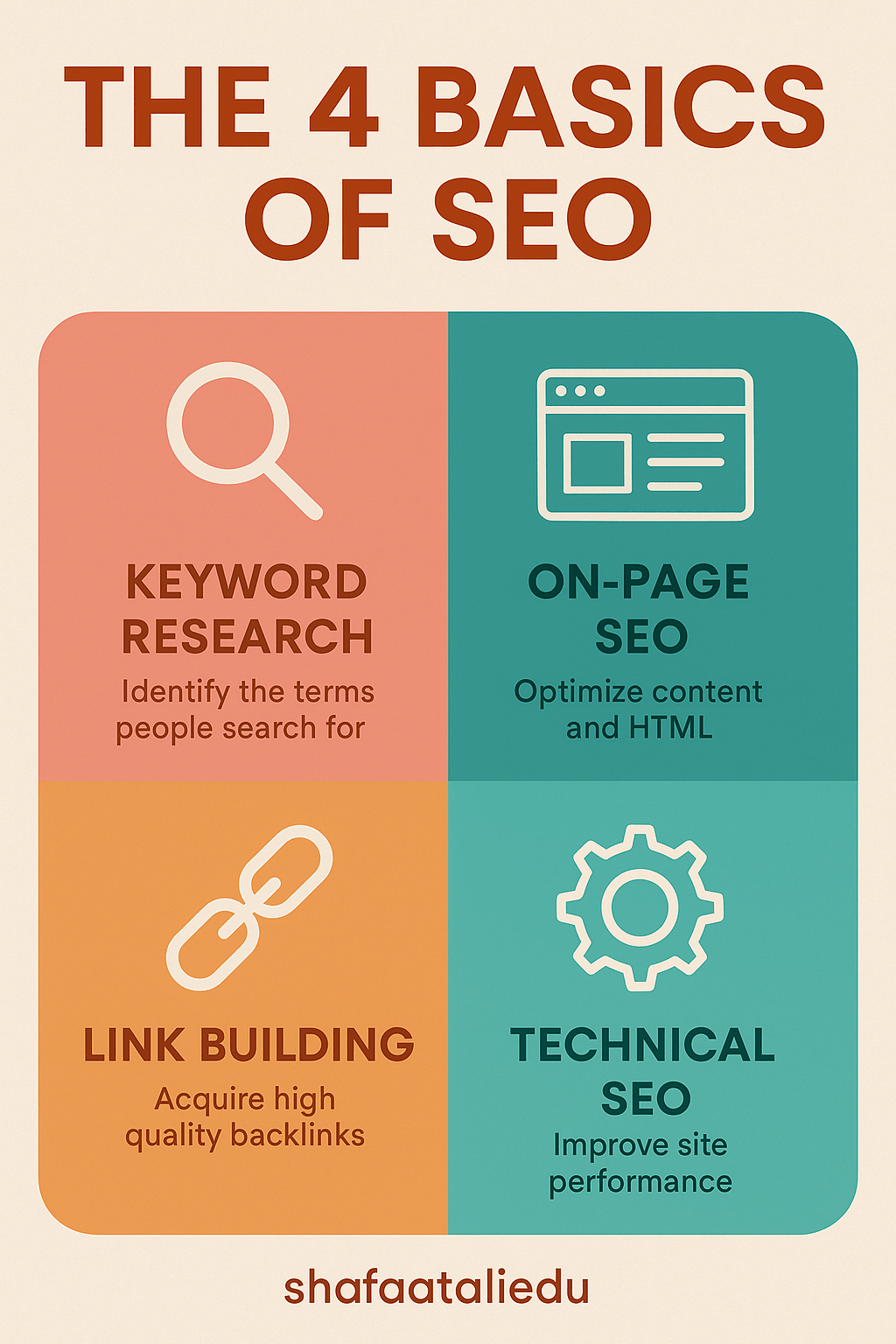
Here are the basics of SEO:
- Keywords: These are the exact words people type into search engines. If your blog includes the phrase “easy homemade pizza,” you’re more likely to match what people are searching for.
- Content: Useful, original, and well-written content helps build trust with both readers and search engines.
- Links: If other websites link to yours, it signals to Google that your content is valuable.
- User experience: A fast, mobile-friendly site that’s easy to navigate keeps visitors happy—and Google notices that too.
SEO isn’t a one-time fix; it’s a long-term strategy. The more consistently you optimize, the better your chances of getting seen.
As the internet keeps growing, SEO will remain your digital storefront’s best friend. Whether you’re blogging, selling products, or sharing ideas, understanding SEO helps you reach the right audience at the right time. Keep learning, and soon you’ll be optimizing like a pro!

Leave a comment