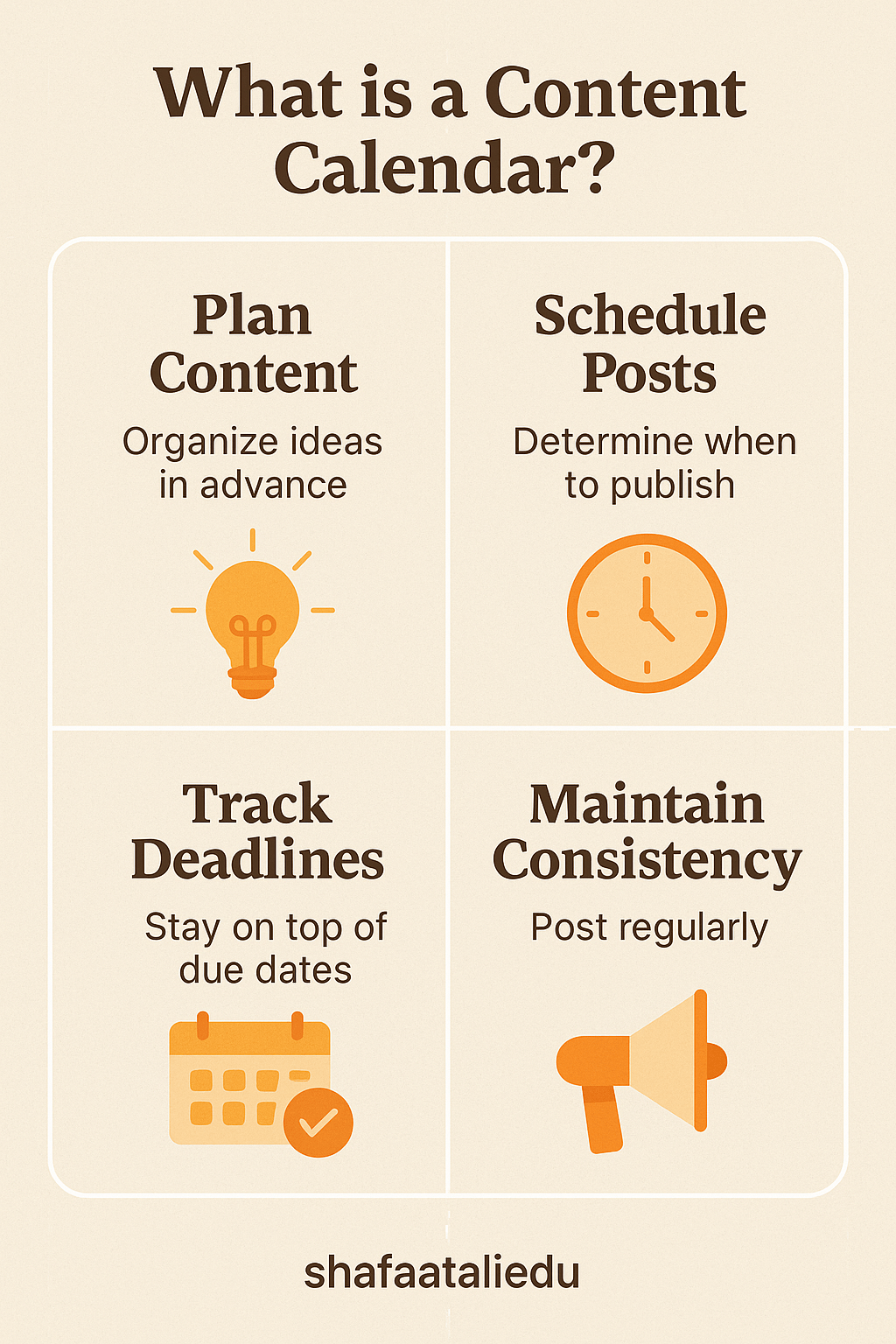
A content calendar is like a planner for your content. Just like you use a calendar to keep track of birthdays, appointments, and events, a content calendar helps you organize when and where you’ll publish your content—whether it’s blog posts, social media updates, newsletters, or videos.
Imagine you’re running a bakery and want to promote your new cupcakes every Friday. Instead of deciding last minute, you can plan your posts ahead—maybe a teaser on Tuesday, a behind-the-scenes video on Wednesday, and a launch post on Friday. That’s your content calendar at work!
Content calendars can be as simple as a spreadsheet with dates, topics, and platforms, or as advanced as using tools like Trello, Notion, or Google Calendar with reminders and task assignments. The goal is to stay consistent and organized, which is especially important if you’re managing multiple platforms or working with a team.
Here’s a quick example:
- June 24 (Blog): “5 Easy Summer Recipes”
- June 25 (Instagram): Photo of one recipe with tips
- June 26 (Newsletter): Link to the blog + bonus recipe
By planning this way, you’re not scrambling for ideas at the last minute, and you can align your content with events, holidays, or product launches. It also helps you spot gaps and avoid repeating the same type of content too often.
Whether you’re a solo blogger, a small business owner, or part of a marketing team, a content calendar keeps your content strategy clear and on track.
Looking ahead, mastering a content calendar opens the door to smarter marketing, less stress, and more time to be creative.

Leave a comment