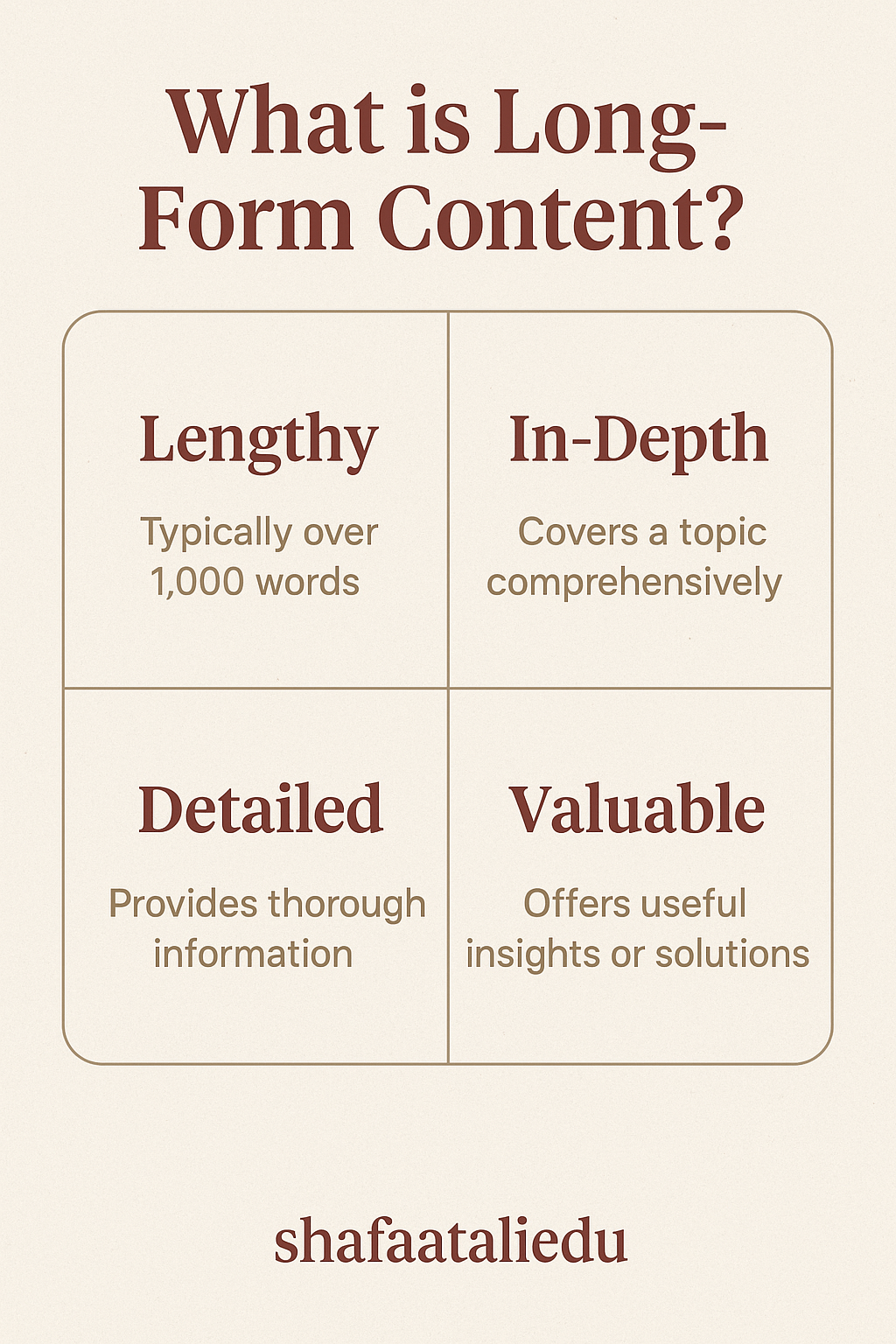
Long-form content is any piece of writing that goes into detail—usually over 1,000 words. Think of it as the difference between a quick snack and a full-course meal. While short content gives you a quick answer, long-form content dives deep, offering detailed explanations, examples, and insights.
Imagine you’re trying to learn how to bake a cake. A short blog post might list the ingredients and basic steps. But a long-form article would guide you through each stage, explain why certain ingredients matter, suggest variations, and even share troubleshooting tips. By the end, you’d not only know how to bake a cake but understand the entire process.
In the digital world, long-form content comes in many forms: blog posts, guides, tutorials, whitepapers, and even in-depth product reviews. It’s especially helpful for topics that need more explanation—like learning a new skill or understanding a complex issue.
So why is long-form content important? First, it builds trust. When a reader sees that you’ve taken time to explain something thoroughly, they’re more likely to see you as a reliable source. Second, search engines like Google often favor long-form content because it tends to answer more questions and keep readers engaged longer.
But long-form doesn’t mean rambling. Quality matters more than length. The best long-form pieces are well-structured, easy to read, and filled with useful information. Using headings, bullet points, and images can make it even more effective.
As people seek deeper knowledge online, long-form content will continue to grow in value. If you’re creating content, think of it as an opportunity to not just inform, but to truly educate and connect with your audience.

Leave a comment