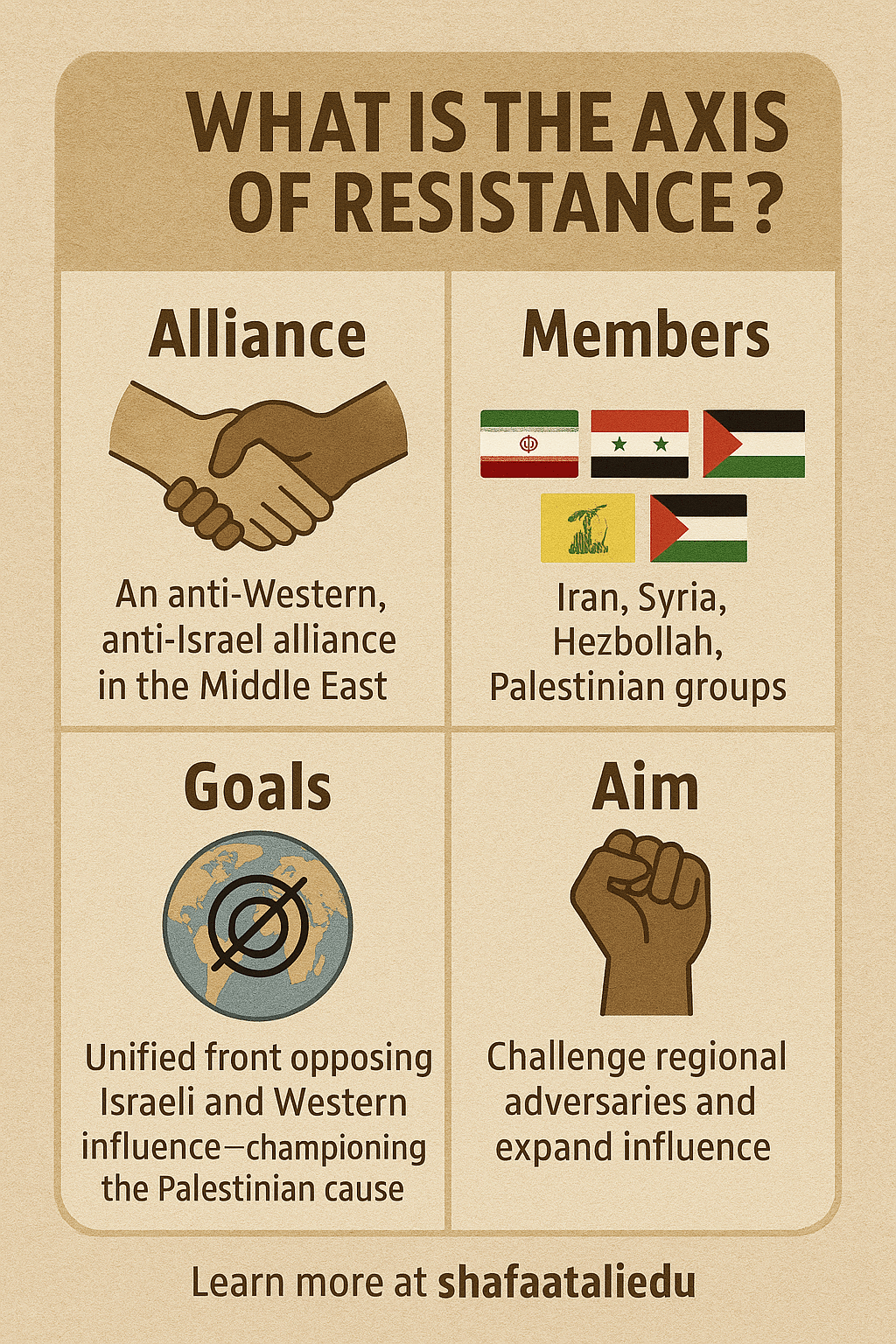
The “Axis of Resistance” is a political and military alliance in the Middle East made up of countries and groups that oppose Western influence—particularly from the United States and Israel. While it’s not a formal organization with official membership, the term generally refers to Iran, Syria, Hezbollah in Lebanon, and various allied groups in Iraq, Yemen, and Palestine.
Let’s break it down simply. Think of it like a team in a game—not an official club, but a group of players who share the same goal: to push back against what they see as foreign interference in their region. Iran is often viewed as the central figure of this axis, offering financial, military, and ideological support to the others.
The term first gained popularity in the early 2000s, especially after the U.S. invasion of Iraq in 2003 and the 2006 war between Hezbollah and Israel. Over time, the alliance has become more active, particularly during the Syrian Civil War and ongoing tensions with Israel and the United States. These groups often share anti-Israel and anti-U.S. positions, but their strategies and priorities can differ.
For example, Hezbollah, a powerful political and armed group in Lebanon, has close ties to Iran and plays a key role in this alliance. In Iraq and Syria, Iran supports various militias that have grown stronger due to conflicts in the region.
It’s important to note that supporters of the Axis of Resistance see it as a force for self-defense and regional independence, while critics argue it contributes to instability and conflict.
Looking ahead, the Axis of Resistance remains a major player in Middle Eastern politics, and its actions will likely continue shaping the region’s future in complex ways.

Leave a comment