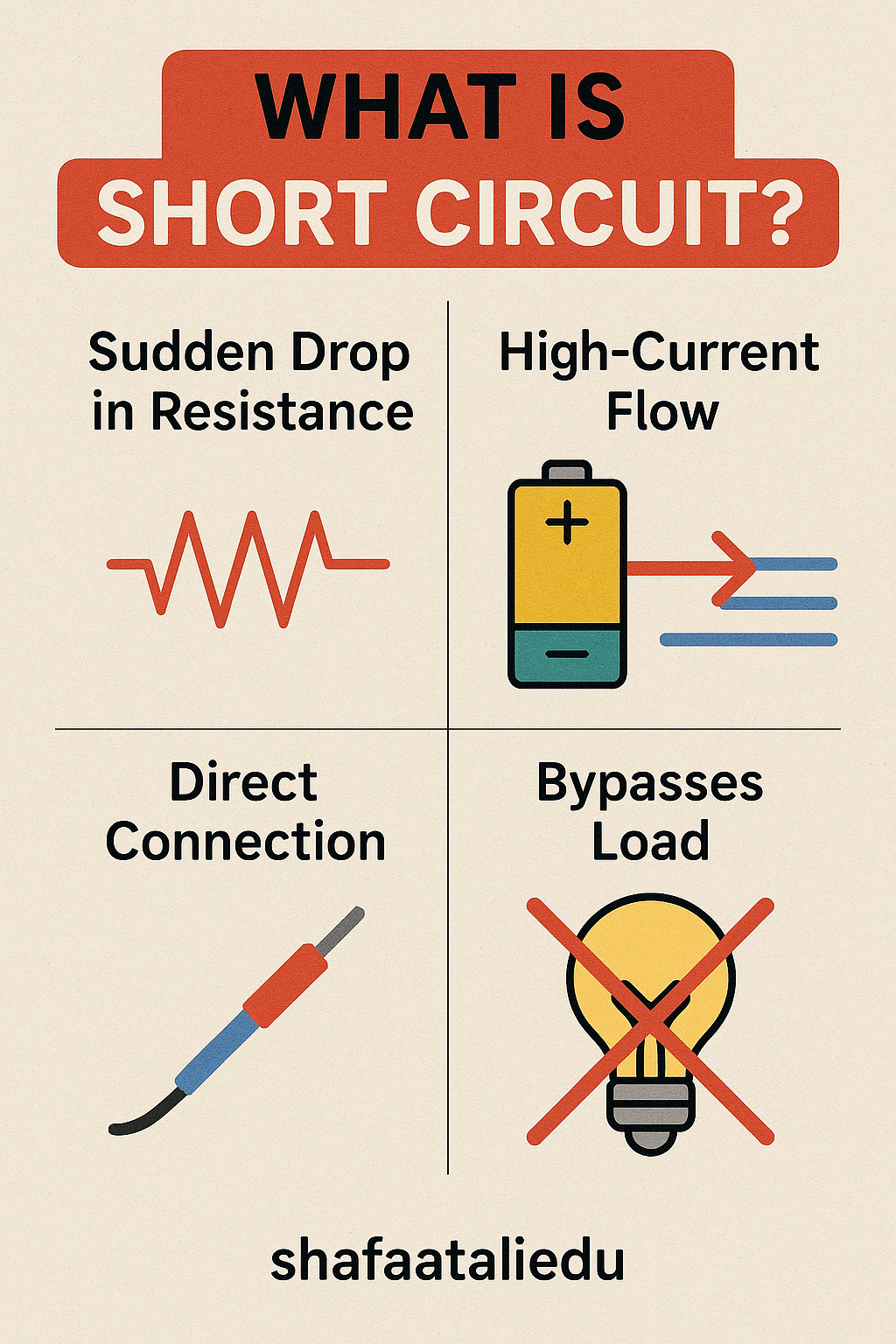
Ever plugged in a device and suddenly the lights flickered or a fuse blew? That might’ve been a short circuit. But what exactly is a short circuit, and why is it such a big deal?
A short circuit happens when electricity takes an unintended shortcut, bypassing the normal pathway in a circuit. In a healthy circuit, electric current flows through wires and devices (like bulbs or TVs) in a controlled way. But in a short circuit, the current suddenly jumps across a low-resistance path—often caused by damaged wires or faulty connections.
Imagine water flowing through a pipe system. Normally, water flows through taps and valves where it’s needed. But what if the pipe breaks and water floods out uncontrollably? That’s similar to a short circuit—electrical energy escapes the proper path and surges through the system.
Let’s break it down with an example: Say a wire’s insulation wears off and it touches another wire. This creates a new, easy route for electricity to flow—skipping past your appliance entirely. Because there’s little resistance, a massive amount of current flows in a very short time. This sudden surge can cause sparks, overheating, fires, or damage to electronic devices.
Homes and buildings are protected from short circuits using circuit breakers and fuses. These devices cut off the power when they detect a surge, helping prevent fires and injuries.
In short, a short circuit is like a traffic jam turned into a car crash—it happens when electricity goes where it shouldn’t, very fast.
As our homes get filled with more gadgets and wiring, understanding short circuits is key to staying safe and using electricity wisely.

Leave a comment