Imagine trying to remember every conversation, email, and purchase from every customer you’ve ever had. Sounds impossible, right? That’s where a CRM system—short for Customer Relationship Management system—comes in.
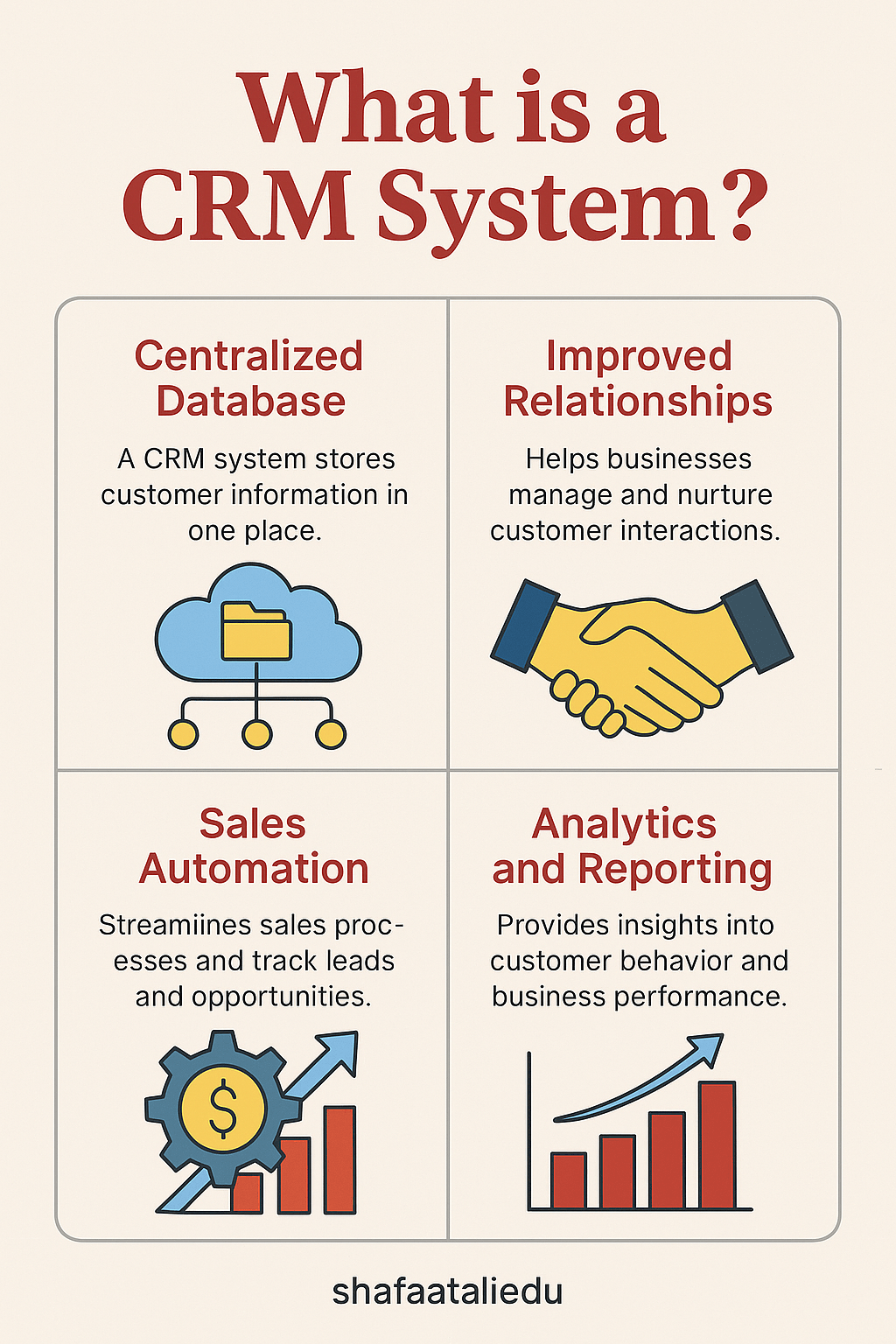
A CRM system is software that helps businesses manage all their interactions with customers and potential customers. It acts like a digital filing cabinet, but much smarter. It keeps track of names, emails, phone numbers, past purchases, support tickets, and even notes from previous conversations—all in one place.
Let’s say you run a small bakery. A CRM can remind you that Sarah always orders a chocolate cake for her son’s birthday in June. So, next year, you can send her a friendly reminder or even offer a discount. That personal touch can turn a one-time buyer into a loyal customer.
CRM systems are also great for teams. Salespeople can see what their coworkers have already discussed with a client, so no one repeats questions or offers conflicting deals. Marketers use CRM data to send targeted emails. And customer service teams can resolve issues faster by seeing the customer’s full history.
There are many popular CRM tools like Salesforce, HubSpot, and Zoho CRM, each offering different features like automation, reporting, and integration with other apps.
In short, a CRM system helps businesses stay organized, build stronger relationships, and grow faster by making sure no customer is forgotten or overlooked.
As your business grows, managing relationships manually just won’t cut it. A CRM isn’t just a tool—it’s a strategy for putting the customer at the heart of everything you do.

Leave a comment