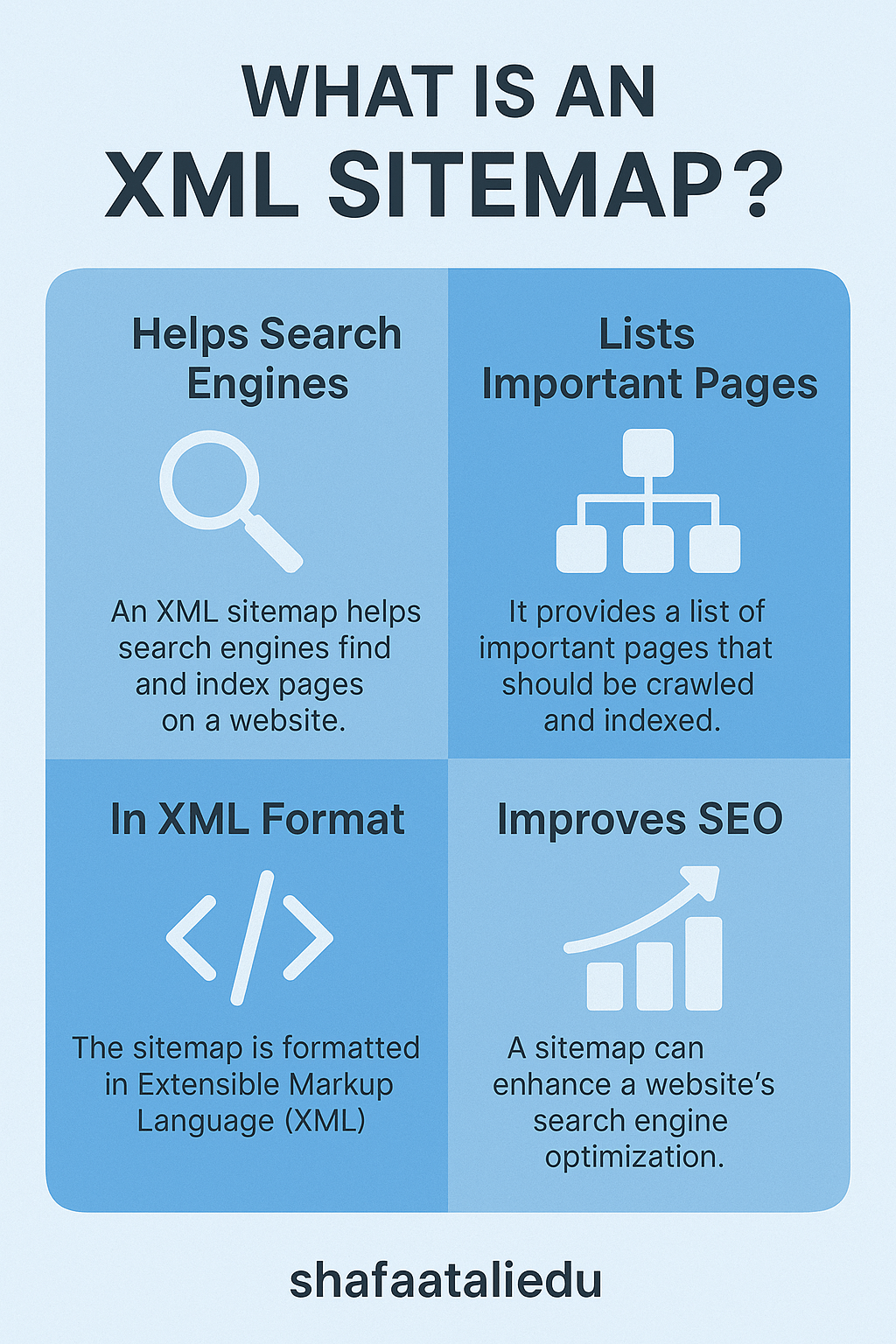
Imagine you own a library, but instead of books, it’s filled with web pages. How would you help someone (like a search engine) find everything quickly? That’s where an XML sitemap comes in—it’s like a detailed floor plan of your website, guiding search engines through every room (page) you want them to visit.
An XML sitemap is a special file that lists all the important pages of your website in a format search engines like Google can easily read. “XML” stands for eXtensible Markup Language, which is just a structured way of organizing data. The sitemap helps search engines crawl your site more efficiently, making sure no important page is missed.
Let’s say you’ve just launched a blog with 100 posts. Some of these posts are tucked away in categories or not linked from your homepage. Without a sitemap, Google might not even know they exist. But with an XML sitemap, you’re directly telling search engines, “Here are all my pages—please index them!”
Creating a sitemap is easy. Many website platforms like WordPress generate one automatically, often at a URL like yourwebsite.com/sitemap.xml. You can also use free tools like Yoast SEO or XML-sitemaps.com. Once created, submit it to search engines via platforms like Google Search Console to boost visibility.
A good sitemap also includes metadata—information about when the page was last updated, how often it changes, and how important it is relative to other pages.
In short, if you care about getting found online, an XML sitemap is a must-have. It doesn’t just organize your website—it makes sure it gets the attention it deserves.
Looking ahead: As websites grow more complex, tools like XML sitemaps will remain essential for keeping your content discoverable in the digital maze.

Leave a comment