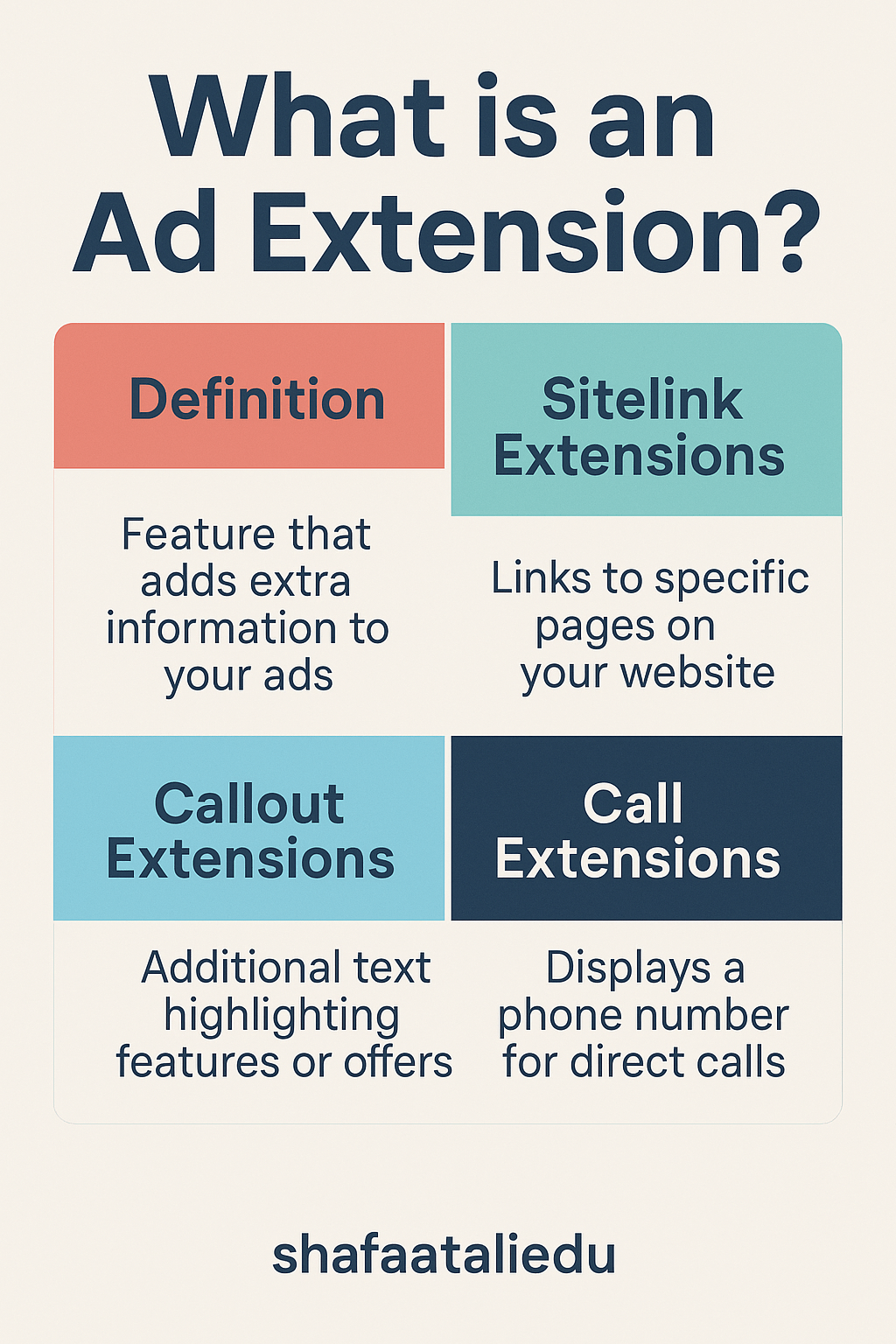
When you search for something on Google, you’ve probably noticed that some ads have extra details—like a phone number, a link to specific pages, or even customer ratings. These helpful extras are called ad extensions.
Think of an ad extension like adding toppings to a pizza. The basic ad is the crust and cheese, but ad extensions add the flavor—more information that makes the ad more appealing and useful. They help your ad stand out and give potential customers more reasons to click.
There are several types of ad extensions, each serving a unique purpose:
- Sitelink Extensions: These add extra links to your website beneath the main ad. For example, a clothing store might include links to “Men’s Shoes” or “Summer Sale.”
- Call Extensions: Adds a clickable phone number, allowing users to call your business directly from the ad.
- Location Extensions: Shows your business address and a map, making it easier for local customers to find you.
- Callout Extensions: Adds short phrases like “Free Shipping” or “24/7 Customer Support” to highlight key benefits.
- Structured Snippet Extensions: Lists specific aspects of your product or service, like “Destinations: Paris, Rome, London.”
Using ad extensions can increase your ad’s visibility and click-through rate because they take up more space and offer more options. Google Ads automatically shows the extensions that are most likely to improve performance, so you don’t need to worry about which to show when.
In short, ad extensions give your ads more power and personality.
As digital ads become more competitive, smart use of ad extensions can be the edge that grabs attention and drives action. So, next time you’re setting up a campaign, think beyond the basic ad!

Leave a comment