If you’ve ever run an online ad campaign—like on Google Ads—you’ve probably heard the term ad group. But what exactly does it mean?
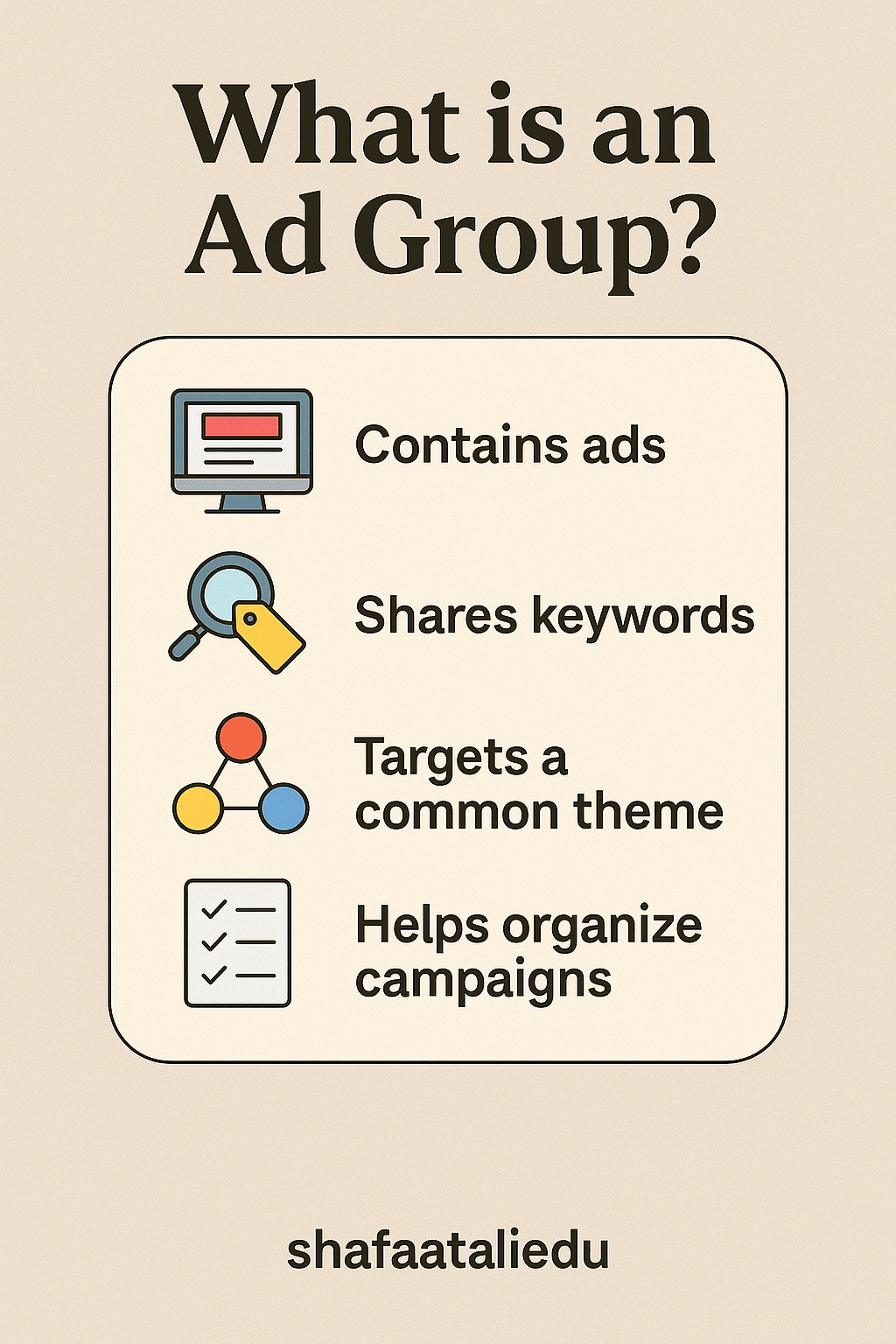
Think of an ad group as a folder inside your digital advertising campaign. Just like you might organize vacation photos into albums, ad groups help organize your ads by theme, product, or goal.
Here’s how it works. When you create a campaign (for example, to sell sneakers), that campaign can contain several ad groups—like one for running shoes, another for basketball shoes, and another for casual sneakers. Each ad group then holds a set of ads and a list of related keywords. So, your running shoes ad group might show ads when someone searches “best running shoes for beginners.”
Why organize this way? It helps keep your ads relevant and targeted. If someone types “basketball shoes,” you don’t want them seeing an ad for casual sneakers. By keeping similar keywords and ads together, ad groups boost your chances of showing the right ad to the right person at the right time.
You can also manage budgets, bids, and performance metrics more precisely. For example, if your running shoes are selling well, you might increase your ad budget just for that group.
In short, ad groups are all about structure and control. They help advertisers stay organized and maximize performance by matching ads closely with what users are searching for.
As digital advertising grows more competitive, knowing how to set up well-targeted ad groups can make or break your campaign. So next time you plan an ad, think about how to group your products or services for the best results.

Leave a comment