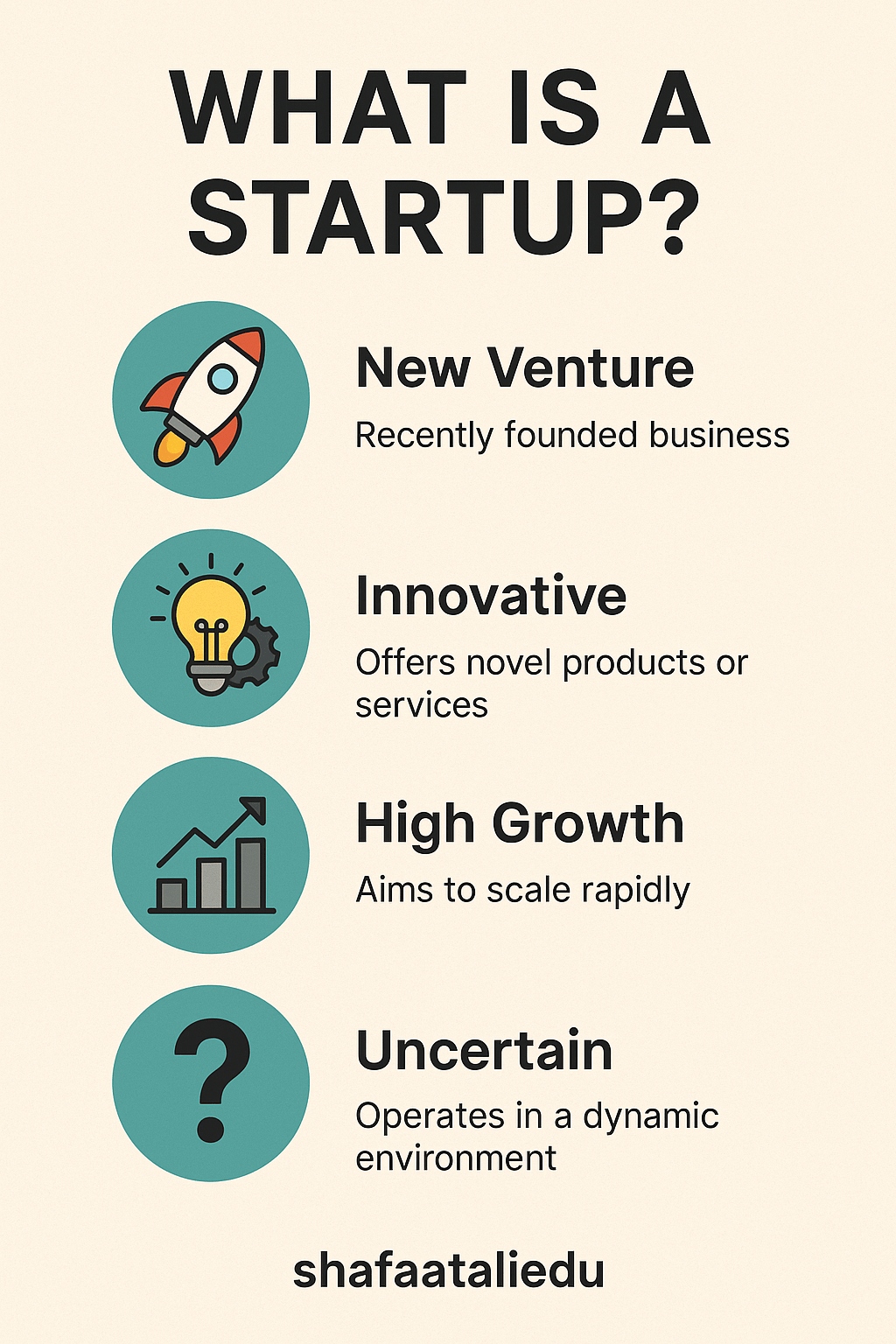
A startup is a new business in its early stages, typically created to solve a specific problem with an innovative product or service. Unlike regular small businesses, startups are built to grow fast—often aiming to serve large markets and scale quickly using technology or unique business models.
Imagine you invent a mobile app that helps people find parking spots in crowded cities. You’re not just opening a local garage—you’re creating a solution that could help people all over the world. That’s the spirit of a startup.
Startups often begin with an idea, a small team, and limited funds. The founders usually invest their own money or raise funds from family, friends, or investors known as venture capitalists. Because the product is still being tested and improved, startups are known for being flexible and fast-moving. They use a “build, measure, learn” approach—trying out ideas, seeing what works, and quickly changing course if needed.
One key feature of startups is innovation. This doesn’t always mean new technology—it could be a new way of doing business. For example, Airbnb didn’t invent travel, but it changed how people find places to stay.
Startups often operate in uncertain environments, where success isn’t guaranteed. Many fail, but the ones that succeed—like Google, Uber, or Shopify—can grow into major companies that change entire industries.
In short, a startup is more than just a new business—it’s a bold attempt to create something valuable, scalable, and impactful, often in a brand-new way.
As the world keeps changing, startups will continue to lead the way in solving tomorrow’s biggest challenges.

Leave a comment