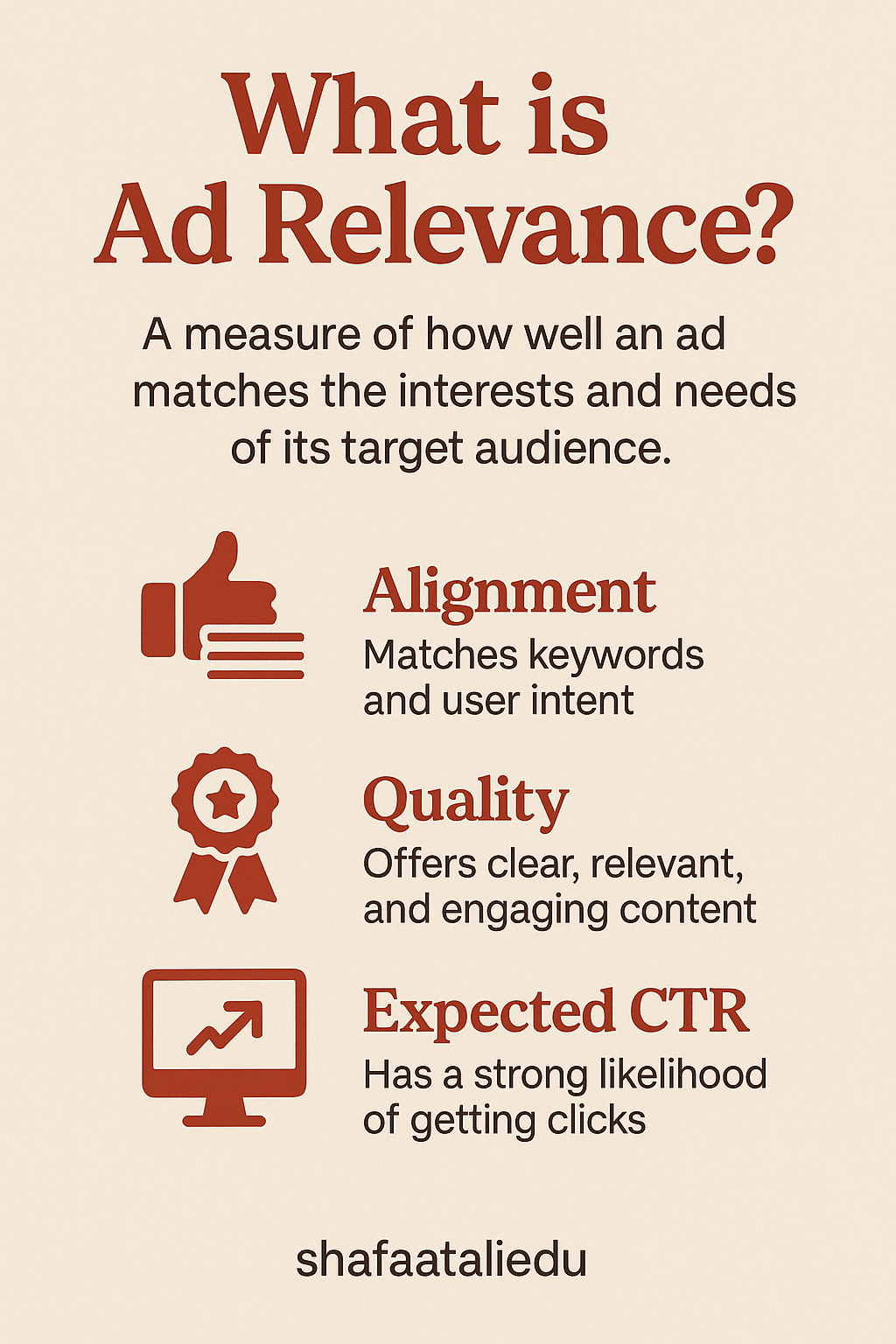
Ad relevance is a measure of how closely your ad matches what people are searching for or interested in. Think of it like showing up at a costume party in the perfect outfit—when your ad “fits” the searcher’s intent, it’s more likely to grab attention and perform well.
Let’s break it down. Imagine someone searches for “running shoes for women.” If your ad headline says “Buy Women’s Running Shoes – Free Shipping,” that’s highly relevant. But if your ad says “Trendy Sneakers for Teens,” it might still be about shoes, but it doesn’t match the search intent as well—so it’s less relevant.
Platforms like Google Ads use ad relevance as part of their ad quality score. This score affects how often your ad is shown and how much you pay per click. High ad relevance means better placement at a lower cost. Low relevance might mean your ad is rarely shown, or it costs more to get clicks.
Ad relevance is influenced by:
- Keywords: Are you using the same words your audience is searching for?
- Ad copy: Does your headline and description clearly reflect the search term?
- Landing page: Does the page your ad leads to match what was promised?
Improving ad relevance is like fine-tuning your message to speak directly to your audience’s needs. Use specific, clear language and always align your ad content with your target keywords.
Looking ahead, as online platforms get smarter, relevance will matter more than ever. Ads that feel useful and well-matched to user intent will win attention—and clicks—in a crowded digital space.

Leave a comment