Chronic Venous Insufficiency (CVI) is a long-term condition where the veins in your legs fail to return blood efficiently back to the heart. This can lead to a variety of uncomfortable and visible symptoms. Recognizing these signs early is crucial for proper diagnosis, treatment, and prevention of complications such as leg ulcers or deep vein thrombosis (DVT).
In this article, we’ll explore the most common symptoms of chronic venous insufficiency, what causes them, and when to seek medical help.
📌 Common Symptoms of Chronic Venous Insufficiency
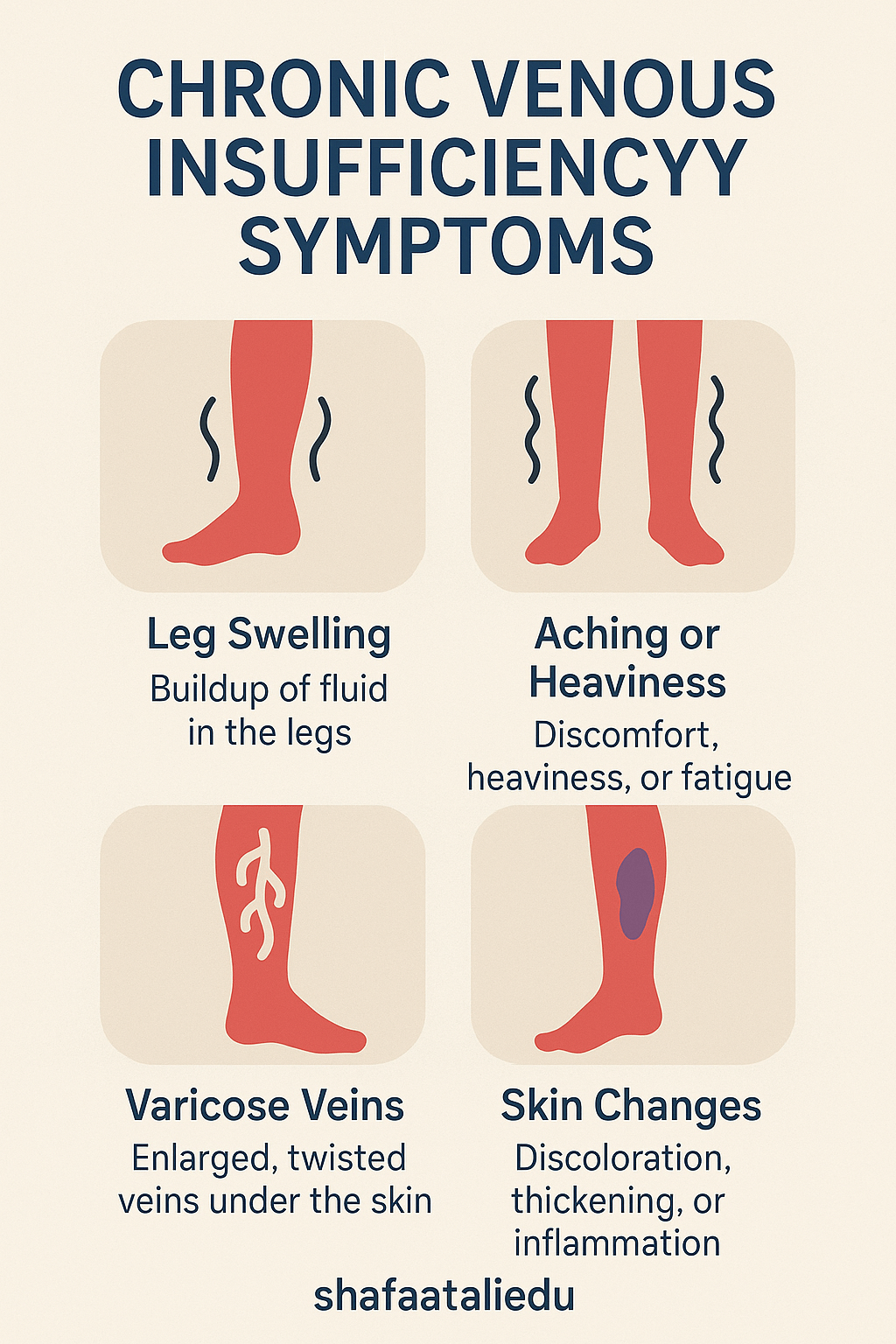
1. Leg Swelling (Edema)
One of the earliest and most common signs of CVI is swelling in the lower legs or ankles, especially after prolonged standing or sitting. This swelling usually worsens throughout the day and improves after resting with the legs elevated.
2. Varicose Veins
Bulging, twisted, and enlarged veins—commonly known as varicose veins—are often visible under the skin. They occur when blood pools in the veins due to valve malfunction.
3. Leg Pain or Aching
You may experience a heavy, tired feeling or dull aching pain in your legs. This discomfort usually worsens after long periods of standing or walking and improves with leg elevation or rest.
4. Itching or Tingling Sensation
CVI can cause your legs or ankles to feel itchy, especially around the varicose veins. This itching can sometimes lead to scratching, which may damage the skin and increase the risk of infection.
5. Skin Discoloration
As the condition progresses, you may notice brownish or reddish skin changes around the ankles and lower legs. This occurs due to blood leaking from the vessels and staining the surrounding tissue.
6. Flaky or Scaly Skin (Stasis Dermatitis)
Chronic inflammation caused by poor circulation can lead to dry, flaky, or leathery skin, especially near the ankles. This is a sign of skin deterioration due to prolonged venous congestion.
7. Leg Cramping or Restlessness
Some people with CVI report frequent muscle cramps, especially at night. Others may experience a restless feeling in the legs, known as restless legs syndrome.
8. Ulcers or Open Sores
In advanced stages, CVI can cause venous ulcers—open, painful wounds that develop near the ankles and are slow to heal. These ulcers are a major complication and require prompt medical attention.
🚩 When to See a Doctor
If you experience any of the following symptoms, consult a healthcare provider:
- Persistent or worsening leg swelling
- Pain or cramping that disrupts sleep
- Skin changes (discoloration, thickening, or dryness)
- Visible varicose veins
- Sores or wounds that are slow to heal
Early diagnosis can help manage CVI effectively and prevent long-term damage.
🧠 What Causes Chronic Venous Insufficiency?
CVI is usually caused by damaged or weakened valves in the leg veins. When these valves fail, blood pools in the legs rather than returning to the heart. Risk factors include:
- Aging
- Obesity
- Pregnancy
- Prolonged standing or sitting
- Family history of varicose veins or CVI
- History of deep vein thrombosis (DVT)
Chronic venous insufficiency is a progressive condition, but recognizing the symptoms early can significantly improve outcomes. If you’re experiencing leg swelling, skin changes, or varicose veins, don’t ignore these signs. Lifestyle changes, compression therapy, and medical treatment can help you manage CVI and maintain your quality of life.

Leave a comment