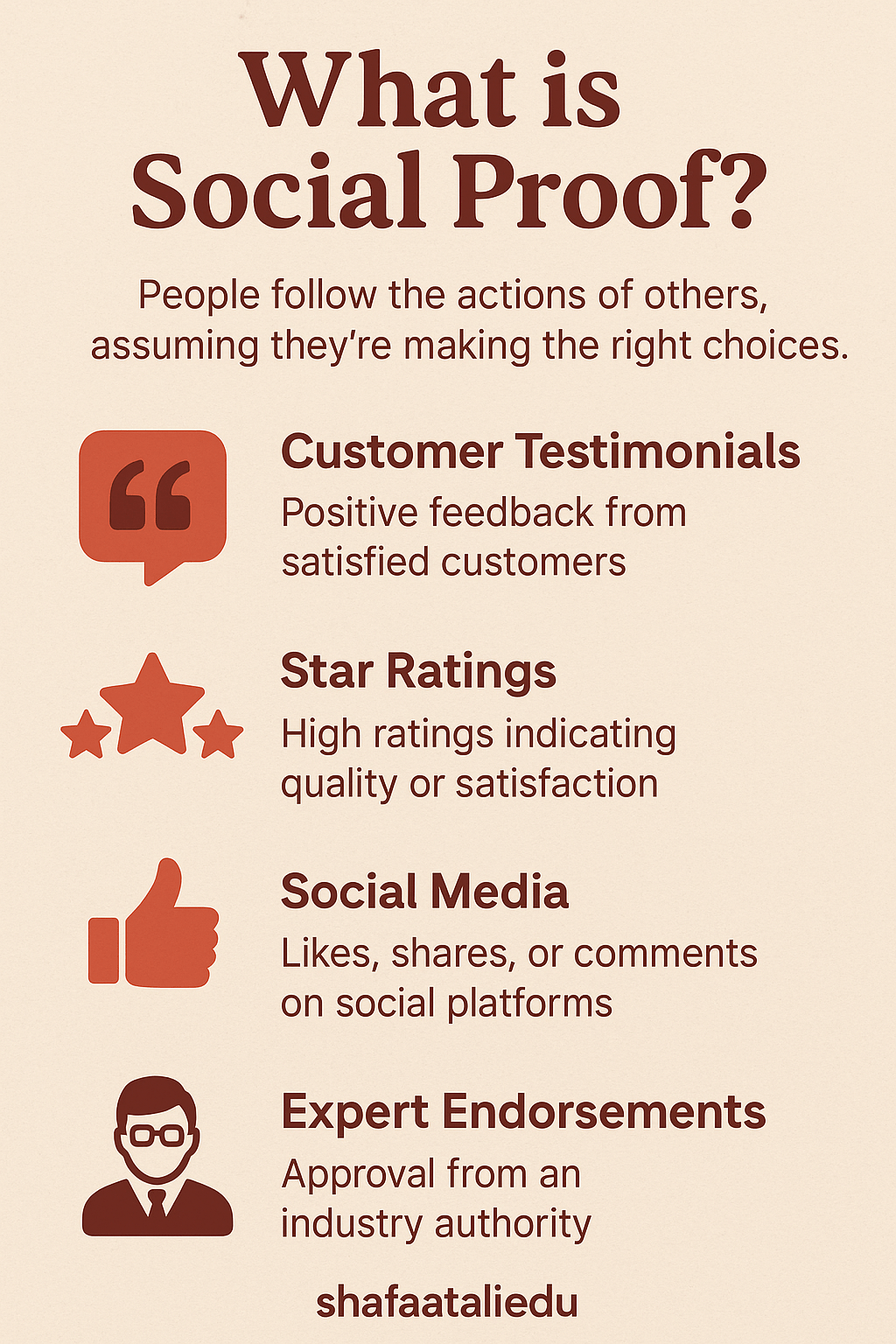
Social proof is the idea that people tend to follow the actions and opinions of others—especially when they’re unsure about what to do. It’s a psychological shortcut we all use: “If other people like it, it must be good.”
Think about it. When you’re picking a restaurant, you probably check reviews. If hundreds of people give it 5 stars, you feel more confident going there. That’s social proof in action.
In marketing and business, social proof helps build trust and credibility. It shows potential customers that others have already had a positive experience. Here are some common examples:
- Customer reviews and ratings
- Testimonials on websites
- Celebrity or influencer endorsements
- Social media shares and likes
- User-generated content (like customers posting photos of products)
- Sales numbers (“Over 1 million sold!”)
For example, if you sell skincare products, sharing before-and-after photos from happy customers or reposting their glowing Instagram stories gives new buyers confidence. They think, “If it worked for them, it might work for me too.”
Even phrases like “Best Seller” or “Trending Now” trigger social proof. They suggest popularity, which can influence someone’s decision—even without knowing all the facts.
To use social proof effectively, always keep it authentic. Fake reviews or overhyped claims can do more harm than good. Real people sharing real experiences are the most powerful form of proof.
Looking ahead: In a world full of choices, honest social proof can be your strongest tool for standing out and earning trust.

Leave a comment