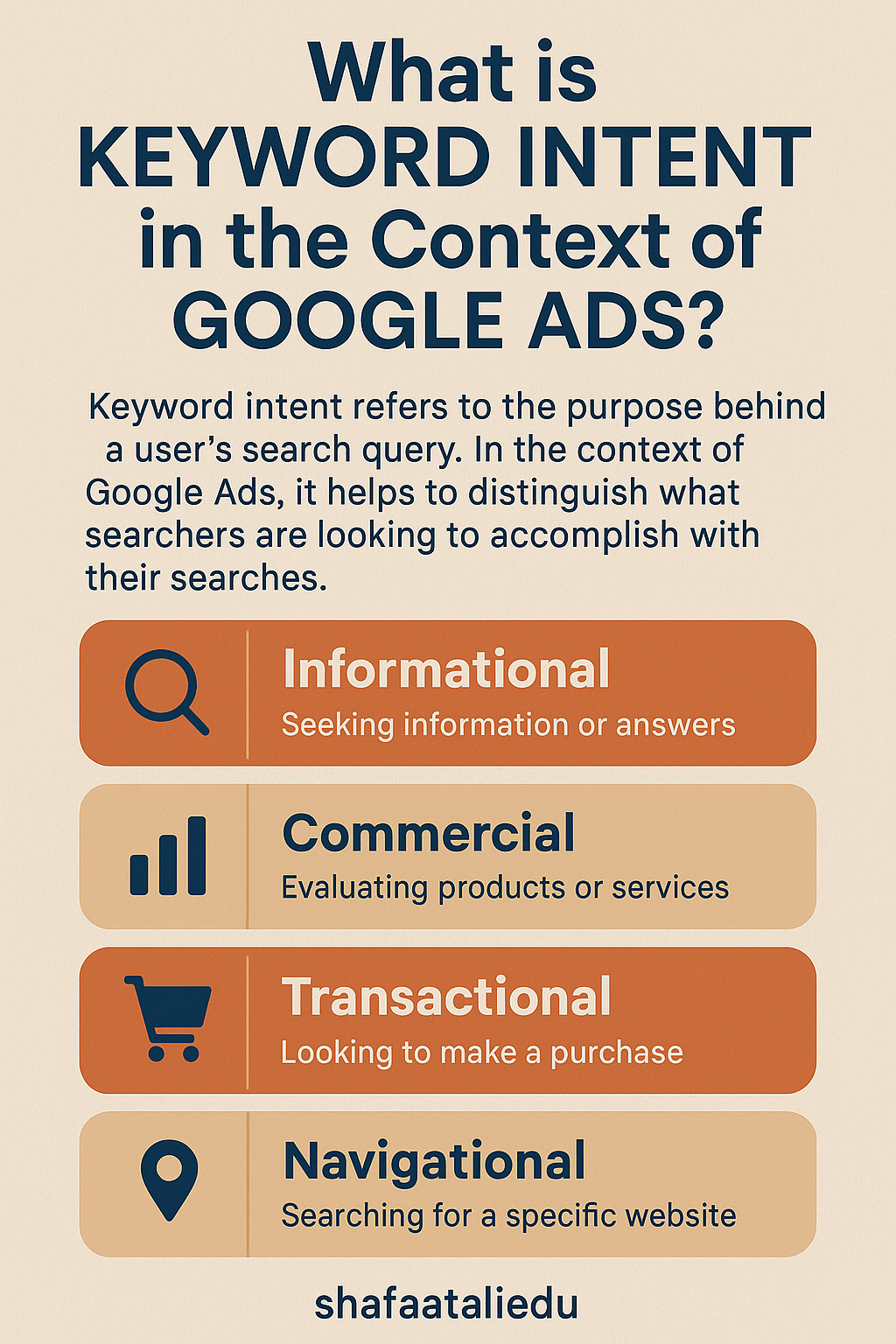
If you’re running Google Ads in 2025, understanding keyword intent is no longer optional—it’s essential. Keyword intent, also known as search intent, is the reason behind a user’s search. It tells you why someone is typing a specific phrase into Google. Are they looking to buy something, compare options, or just learn more? Knowing the intent behind a keyword helps you match your ads with the right audience and improve both click-through rates and conversions. Here’s what you need to know.
Types of Keyword Intent (with Examples)
There are four main types of keyword intent you should be aware of in your Google Ads strategy:
- Commercial Intent: These keywords show that the user is ready to buy soon. Examples include “best laptops under 100k,” “top running shoes for men,” or “affordable SEO services.” These users are comparing options and want help choosing.
- Transactional Intent: The user is ready to take action right now. Keywords include “buy iPhone 15 Pro Max,” “subscribe to Grammarly,” or “order flowers online.” If you’re selling products or services, this is gold.
- Informational Intent: These users want answers or explanations. Phrases like “how to set up Google Ads,” “what is keyword bidding,” or “benefits of digital marketing” are common. They’re not ready to buy yet but could become leads if nurtured.
- Navigational Intent: The user is trying to reach a specific brand or site. Keywords like “Facebook login,” “Nike official site,” or “YouTube premium” fall under this category. These are usually best served by brand-specific campaigns.
Why Keyword Intent Matters in Google Ads
Google’s AI in 2025 has become much better at understanding user behavior, so matching your ad copy and landing pages with the right keyword intent increases ad relevance and Quality Score. This means:
- You pay less per click.
- You reach users more likely to convert.
- You avoid wasting budget on the wrong audience.
How to Identify Keyword Intent
When planning your campaigns, ask: What action is the user likely to take after searching this term? Here’s a simple method:
- Look for action words like “buy,” “download,” or “book” (Transactional)
- Watch for comparison terms like “best,” “top,” or “vs” (Commercial)
- Scan for question terms like “how,” “what,” or “why” (Informational)
- Brand names often signal Navigational intent
Use Google’s Keyword Planner, check the SERPs, and examine what kinds of pages currently rank for your keyword. If most results are blogs, the intent is likely informational. If you see product listings, it’s transactional.
How to Use Intent in Your Campaigns
To get better results from your Google Ads, structure your campaigns based on keyword intent:
- Informational Keywords: Use them for blog promotion, lead magnets, or awareness-stage offers.
- Commercial Keywords: Run comparison-style ad copy and highlight features, testimonials, or benefits.
- Transactional Keywords: Send users directly to product or service pages with strong CTAs like “Buy Now” or “Start Free Trial.”
- Navigational Keywords: Focus on branded campaigns or defend your brand if competitors are bidding on your name.
Keyword intent helps you go beyond guessing and start targeting with precision. In 2025, Google Ads is all about user experience and relevance. The more closely your ads match what people actually want, the better your results. By understanding keyword intent, you spend less, convert more, and build campaigns that actually work

Leave a comment