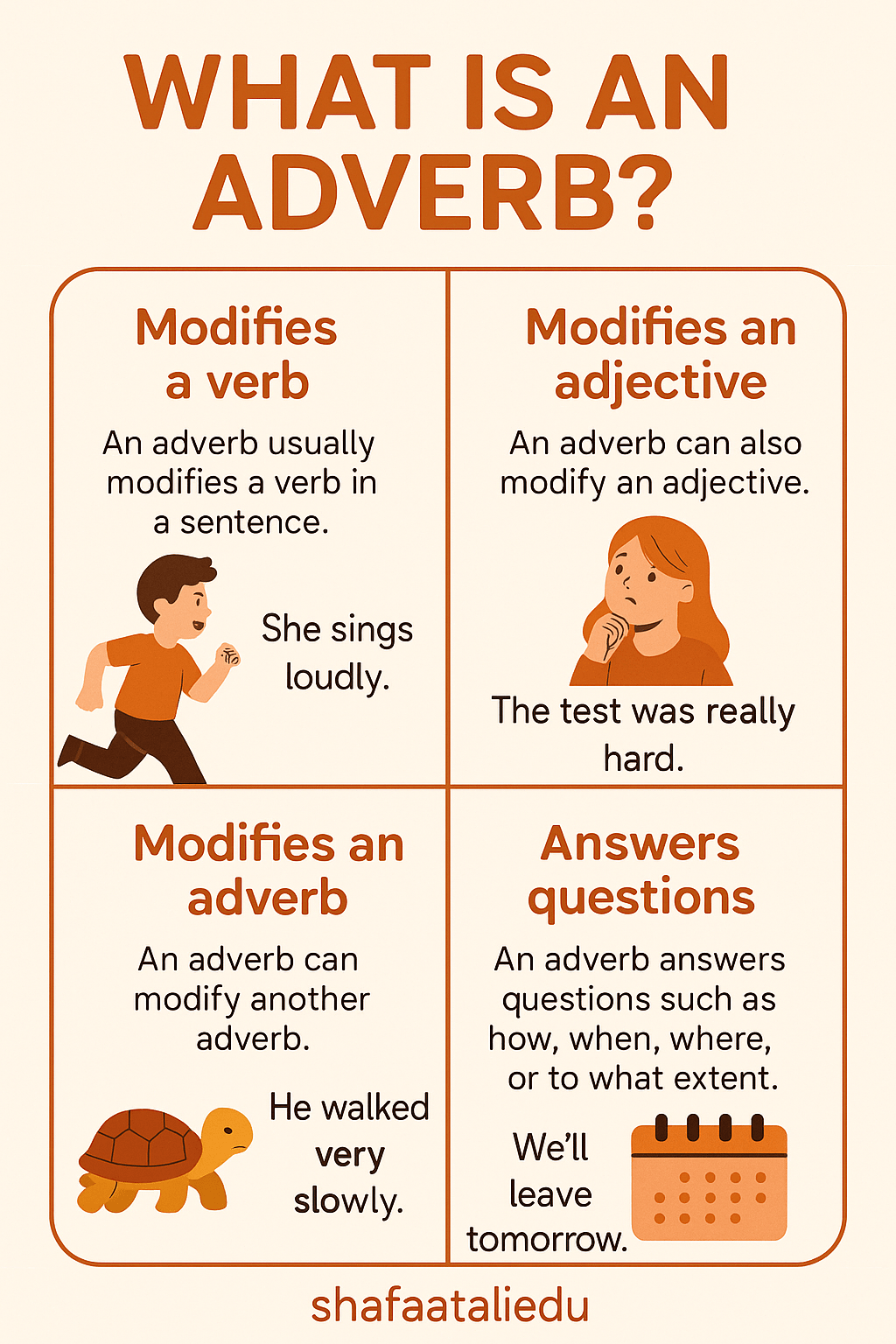
An adverb is a word that adds more detail to a verb, adjective, or even another adverb. In simple terms, adverbs describe how, when, where, or to what extent something happens. If a verb is the action, the adverb is the extra flavor that tells us more about how that action is done.
Let’s say someone runs. If we add an adverb: She runs quickly. Now we know how she runs. The word quickly is the adverb—it modifies the verb runs.
Here are a few more examples:
- When: He arrived yesterday.
- Where: The kids are playing outside.
- How: She spoke softly.
- To what extent: I’m very tired.
A lot of adverbs end in -ly, like slowly, happily, or carefully, which makes them easy to spot. But not all adverbs follow that rule. Words like now, well, too, fast, and never are also adverbs.
Here’s a fun way to test it: ask yourself, “Does this word describe a verb, an adjective, or another adverb?” If yes, it’s likely an adverb.
Example: She sings beautifully → “beautifully” tells us how she sings.
Adverbs help make our language more specific and vivid. Without them, we might say “He danced.” Add an adverb and you get “He danced gracefully,” which paints a much clearer picture.
As you learn more, you’ll see how adverbs let you shape tone, pace, and even attitude in both speech and writing.

Leave a comment