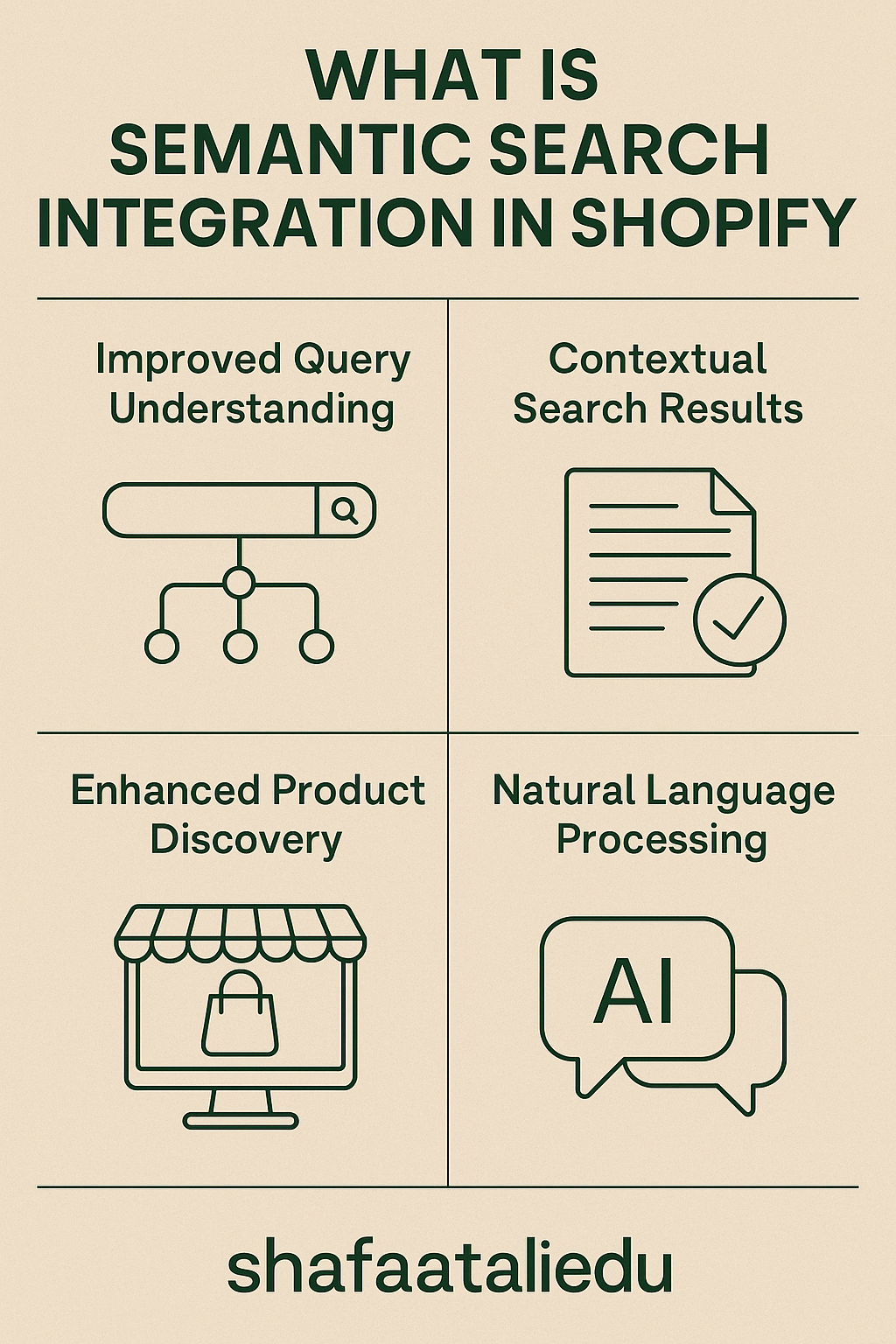
Semantic search integration in Shopify means making your store’s search bar smarter. Instead of only matching exact keywords (like “red shoes”), semantic search understands what your customer really means—even if they use different words. So if someone types “crimson sneakers,” your store still shows red shoes.
Here’s the problem: Traditional search only looks for word matches. It’s like a robot with no common sense. Semantic search, on the other hand, uses natural language processing (NLP) and machine learning to understand intent and context.
For example, imagine your customer searches for “running gear for cold weather.” A keyword search might only find products titled “running gear.” But a semantic search understands the meaning behind the phrase and shows thermal leggings, windbreaker jackets, and gloves—even if those exact words aren’t in the product title.
Shopify doesn’t have deep semantic search built-in by default, but you can integrate it using apps and tools like:
- Algolia: Known for fast, intelligent search.
- Searchspring or Klevu: These plug-ins understand shopper intent and improve product discovery.
- Custom AI integrations: With tools like OpenAI or Elasticsearch, developers can build even more advanced search features.
Setting it up usually involves installing the app, syncing your product catalog, and tweaking some settings—no heavy coding needed for most solutions.
Why does this matter? Because better search = better sales. If shoppers find what they’re looking for faster, they’re more likely to buy. It’s like hiring a super helpful store assistant who knows what customers want—even if they don’t ask perfectly.
As AI evolves, expect semantic search to become the new standard for every online store—not just big brands.

Leave a comment