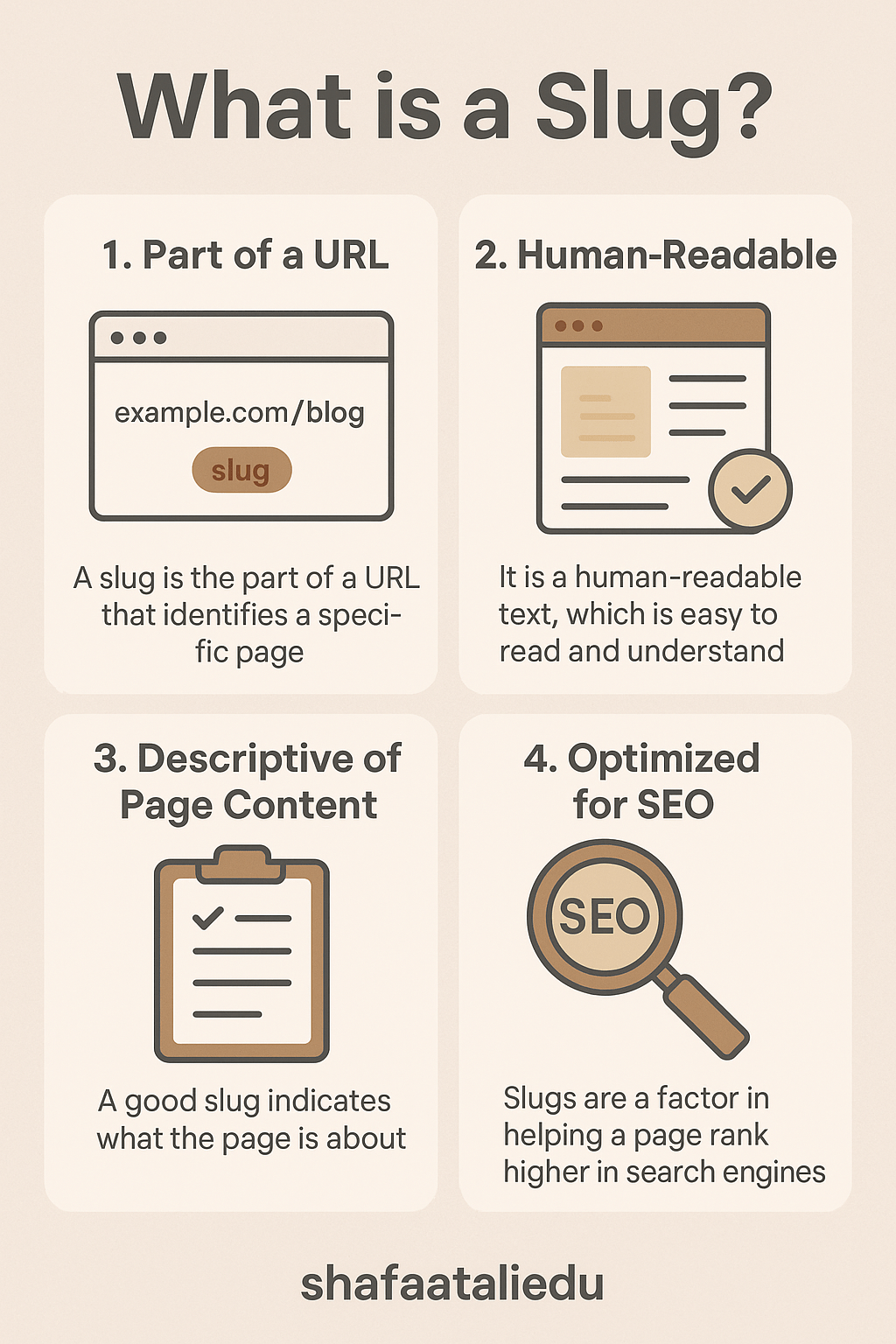
A slug is the part of a URL (web address) that comes after the main website name and helps identify a specific page. It’s like the name tag for a webpage. For example, if the full URL is www.example.com/what-is-a-slug, then what-is-a-slug is the slug.
Think of a slug like the label on a file folder. The folder (your website) might contain lots of documents (pages), and the slug tells you which document you’re opening. It keeps things neat, organized, and easy to find—for both visitors and search engines.
Slugs are usually made of lowercase letters and words separated by hyphens. They don’t include spaces, special characters, or unnecessary words. A good slug is short, clear, and directly related to the page’s topic. For instance, a blog post about pizza recipes could have the slug easy-pizza-recipes.
Here’s a step-by-step example:
- You write a blog post called “10 Tips for Beginner Gardeners.”
- Your website automatically creates a URL:
www.yoursite.com/10-tips-for-beginner-gardeners. - The part after the slash is the slug:
10-tips-for-beginner-gardeners.
Why does a slug matter? Because it affects how your content shows up in search engines and how easily people can share or remember your link. A clean, readable slug can improve your SEO (search engine optimization) and make your website look more professional.
Whether you’re blogging, running a business site, or just curious about web design, understanding slugs helps you take more control over your content. Next time you publish a page, take a second to check the slug—it’s a small detail that makes a big difference.

Leave a comment