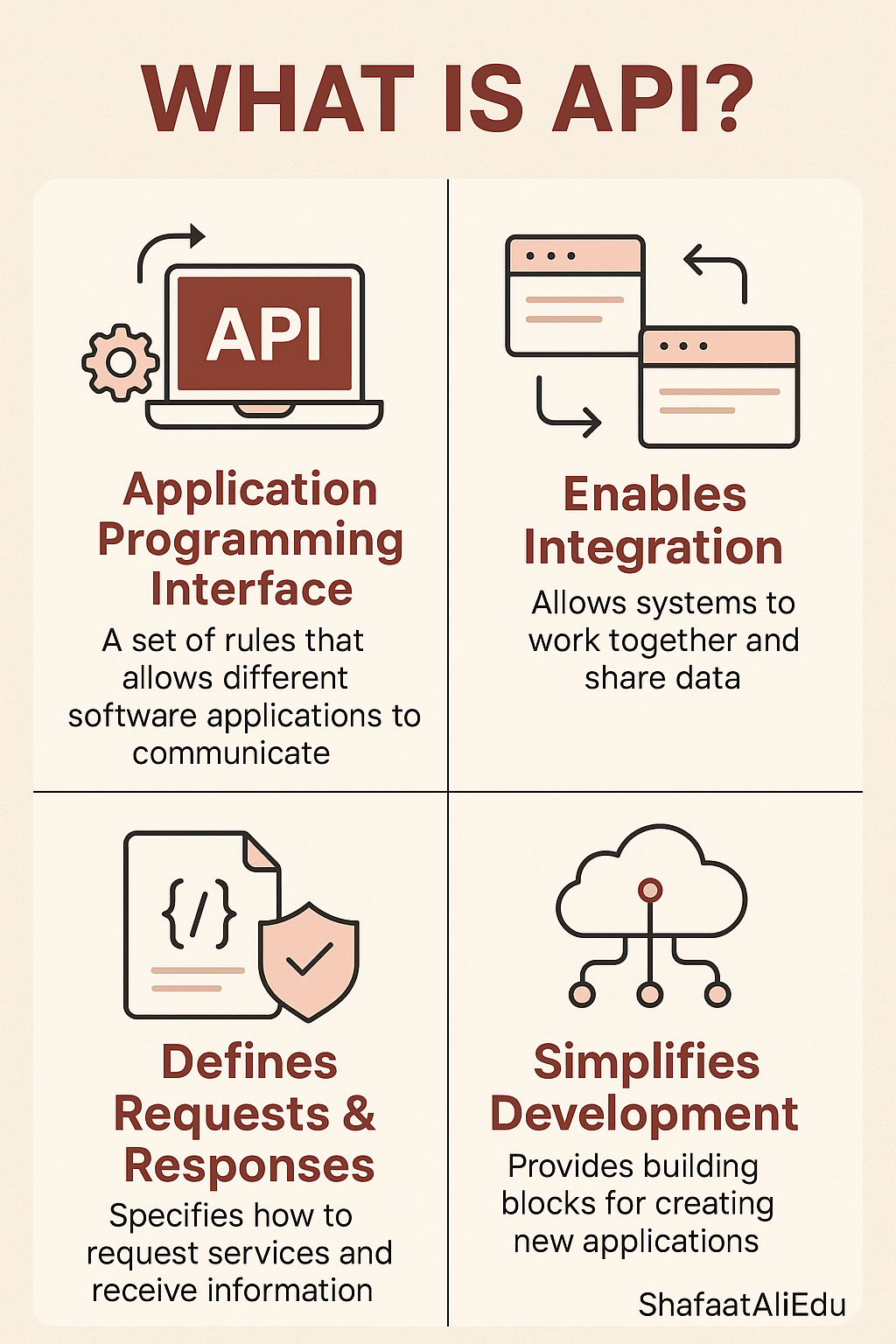
An API, or Application Programming Interface, is like a waiter at a restaurant. You (the user) place an order, the waiter (API) takes your request to the kitchen (the system), and then brings your food (the result) back to you. You don’t need to know how the kitchen works—you just need to know what to ask for.
In tech terms, an API is a set of rules that lets different software programs talk to each other. Let’s say you’re using a weather app. That app doesn’t create the weather data—it uses an API to request it from another system that collects and stores weather information. The API acts like a bridge, passing your request and then delivering the response in a way the app can understand.
Here’s a simple, real-life example:
Imagine you’re booking a flight online. The website uses an API to collect flight data from multiple airlines. When you search for tickets, the API gathers information like prices, times, and availability from each airline and shows it to you in one place.
APIs can be private (used inside one company), partner-based (shared with selected partners), or public (open to any developer). For instance, Google Maps offers a public API that developers can use to add maps to their own websites or apps.
The beauty of APIs is that they make things faster, simpler, and more connected. Instead of building everything from scratch, developers use APIs to plug into services that already exist.
As technology keeps evolving, APIs will continue to play a key role in making apps smarter and more connected—just like that friendly waiter helping everything run smoothly behind the scenes.

Leave a comment