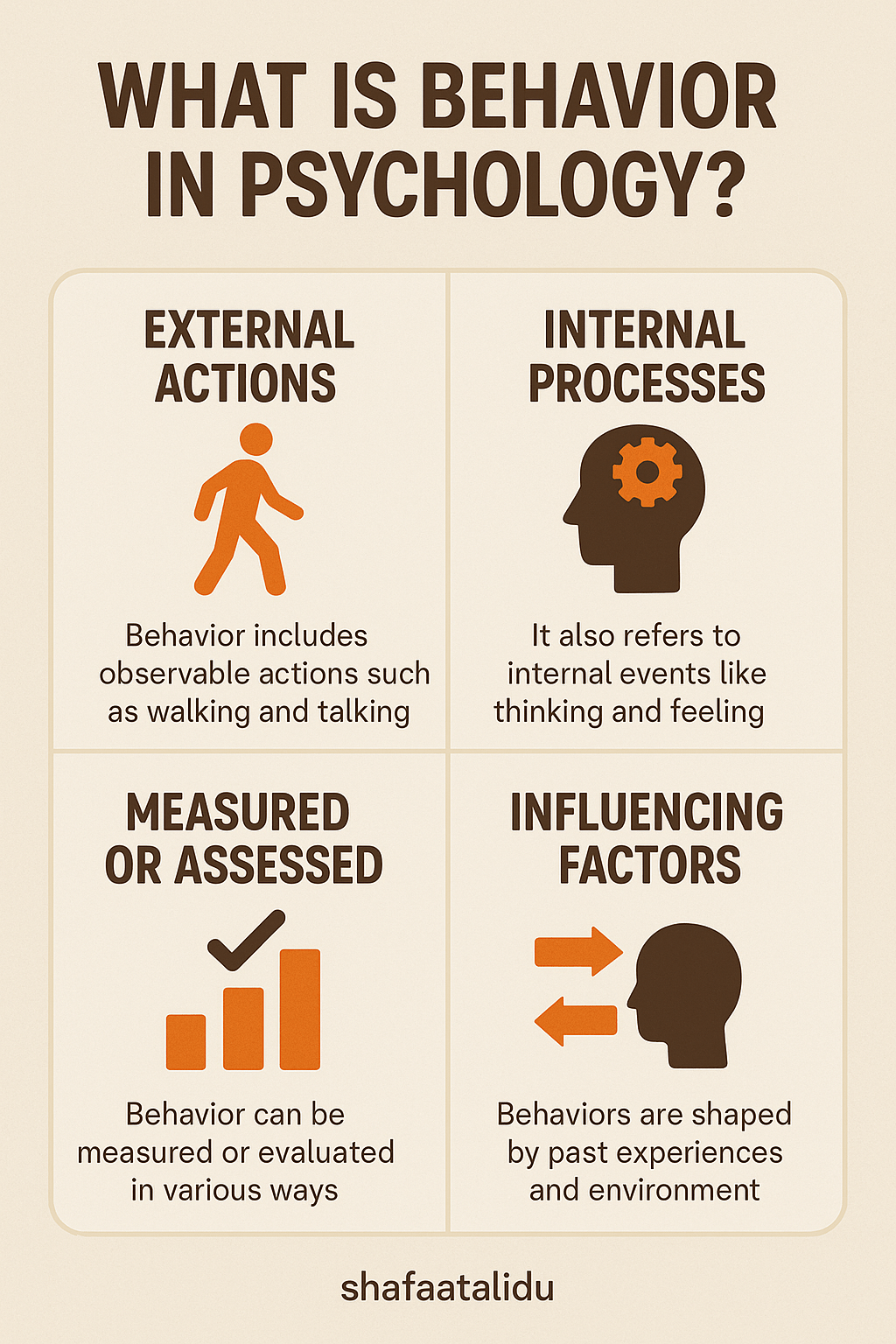
In psychology, behavior refers to any observable action a person (or animal) does. It includes everything from talking, walking, and eating to more subtle actions like facial expressions, eye movements, or body language. If it can be seen or measured, it’s considered behavior.
Imagine watching someone laugh, study, or get nervous before a speech—all of those are behaviors. Even habits like nail-biting or checking your phone constantly are behaviors psychologists might study.
Psychologists often divide behavior into two types:
- Overt Behavior – Visible actions like speaking, running, or smiling. These are easy to observe and record.
- Covert Behavior – Internal actions like thinking, feeling, or imagining. These aren’t directly visible but can still be studied through interviews, brain scans, or self-reports.
Why is behavior important in psychology? Because it gives clues about what’s happening in the mind. For example, if someone avoids eye contact and speaks softly, a psychologist might explore whether they’re feeling anxious or shy.
Psychologists study behavior to understand:
- Why people act a certain way
- How habits are formed
- How mental health affects actions
- What influences choices and motivation
Let’s take an example: A student procrastinates before exams. That behavior could be linked to fear of failure, lack of motivation, or even perfectionism. By understanding the why behind the behavior, psychology helps create strategies to change it.
In short, behavior is how we express what’s going on inside—through actions, habits, and reactions. Studying behavior is one of the best ways to understand the human mind.

Leave a comment