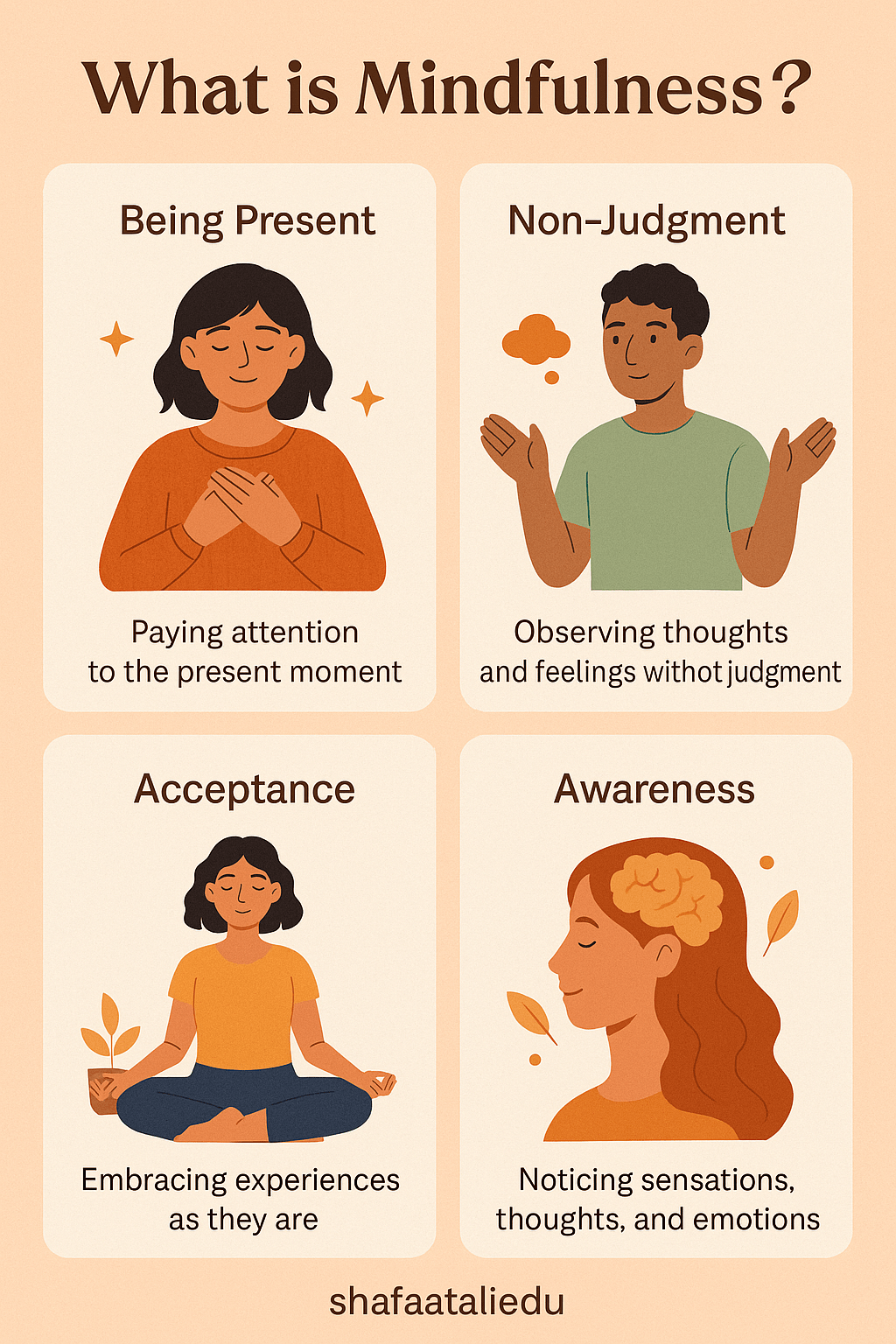
Mindfulness is the practice of paying full attention to the present moment—on purpose and without judgment. It means noticing what you’re thinking, feeling, or sensing right now, rather than getting lost in the past or worrying about the future.
Imagine sipping a cup of tea and really focusing on its warmth, flavor, and aroma. You’re not scrolling your phone or thinking about your to-do list. You’re just there, fully experiencing that one moment. That’s mindfulness.
At its core, mindfulness is about being aware. It doesn’t mean clearing your mind or avoiding thoughts—it means observing them without reacting. For example, if you feel stressed, mindfulness helps you notice the feeling, understand it, and let it pass without being overwhelmed.
Mindfulness is often practiced through simple activities like:
- Mindful breathing – Focusing on your breath coming in and out.
- Body scans – Noticing physical sensations from head to toe.
- Mindful walking – Paying attention to your steps, balance, and surroundings.
- Eating mindfully – Truly tasting and appreciating your food.
Science backs up its benefits. Mindfulness has been shown to reduce stress, improve focus, boost emotional health, and even help with sleep.
You don’t need any special tools—just a few minutes and your attention. Apps like Headspace or Calm can guide you, but even just sitting quietly and noticing your breath is a great start.
In our fast-paced world, mindfulness is like hitting the pause button. It helps you slow down, feel grounded, and respond to life with more clarity and calm.

Leave a comment