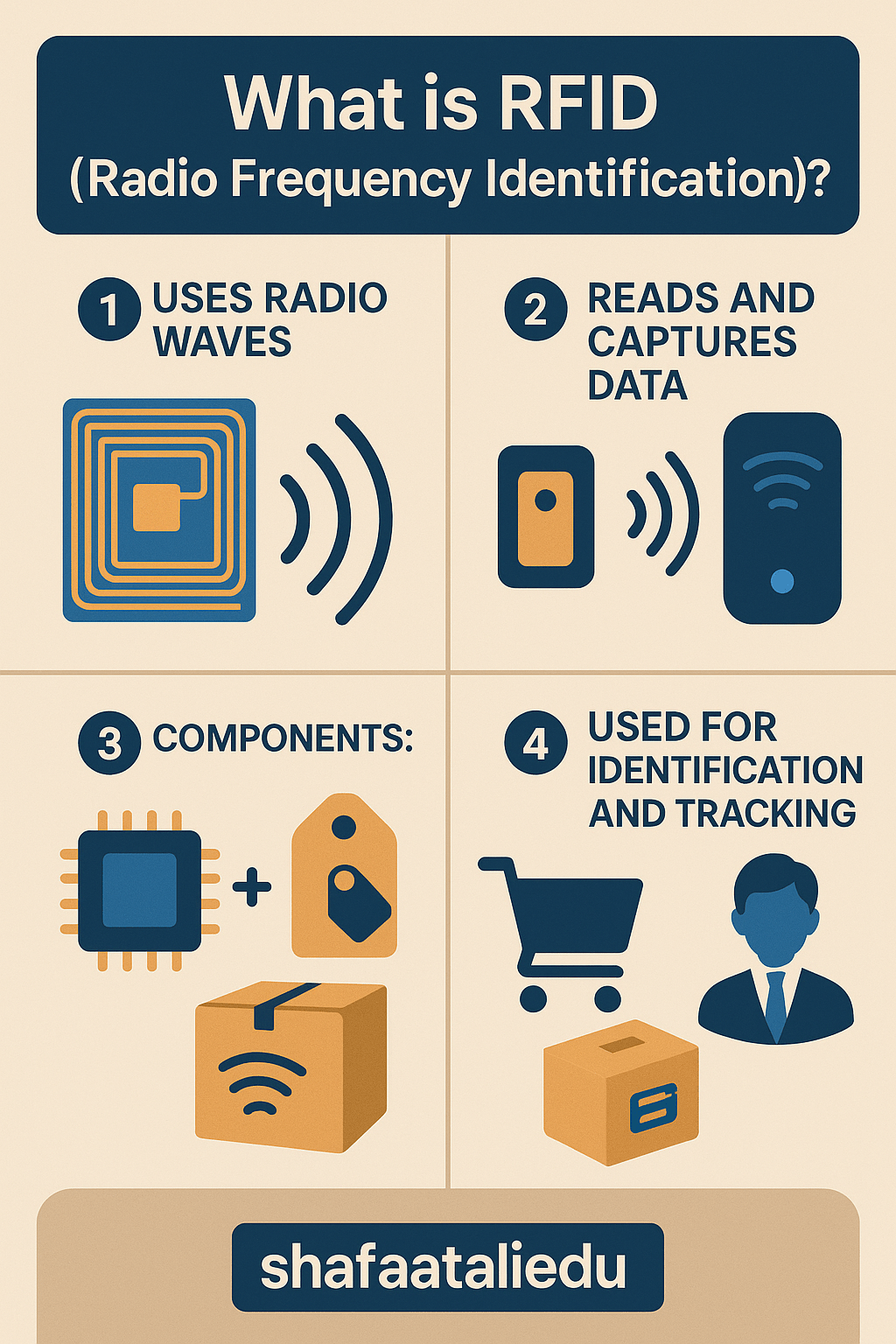
RFID, or Radio Frequency Identification, is a wireless technology that uses radio waves to identify and track objects. Think of it like a barcode you don’t need to see or scan manually. Instead of using a scanner and a printed code, RFID works through small electronic tags and readers that can communicate through the air—sometimes even through walls or boxes.
An RFID system has two main parts:
- RFID Tag: A tiny chip with an antenna, attached to the object. It stores data like a product number or ID.
- RFID Reader: A device that sends out radio waves and picks up signals from nearby RFID tags.
Here’s a real-life example: Ever walked out of a store and the security alarm beeped? That’s probably RFID at work. The products had RFID tags, and the store’s exit has readers checking if items were paid for.
There are two types of RFID tags:
- Passive tags: No battery, powered by the reader’s signal (used in most retail and ID cards).
- Active tags: Have a battery and can transmit over longer distances (used in shipping and tracking large equipment).
Where is RFID used?
- Retail: For tracking inventory automatically.
- Libraries: To manage books and prevent theft.
- Toll booths: To charge cars without stopping.
- Pets and livestock: Microchips for ID.
- Access cards: Like office or hotel key cards.
Unlike NFC, RFID doesn’t require devices to be very close—some RFID systems work from several meters away.
RFID is changing the way we track and manage things—quietly making systems faster, smarter, and more efficient.
Curious how RFID compares to NFC or Bluetooth? Stay tuned for a side-by-side guide.

Leave a comment