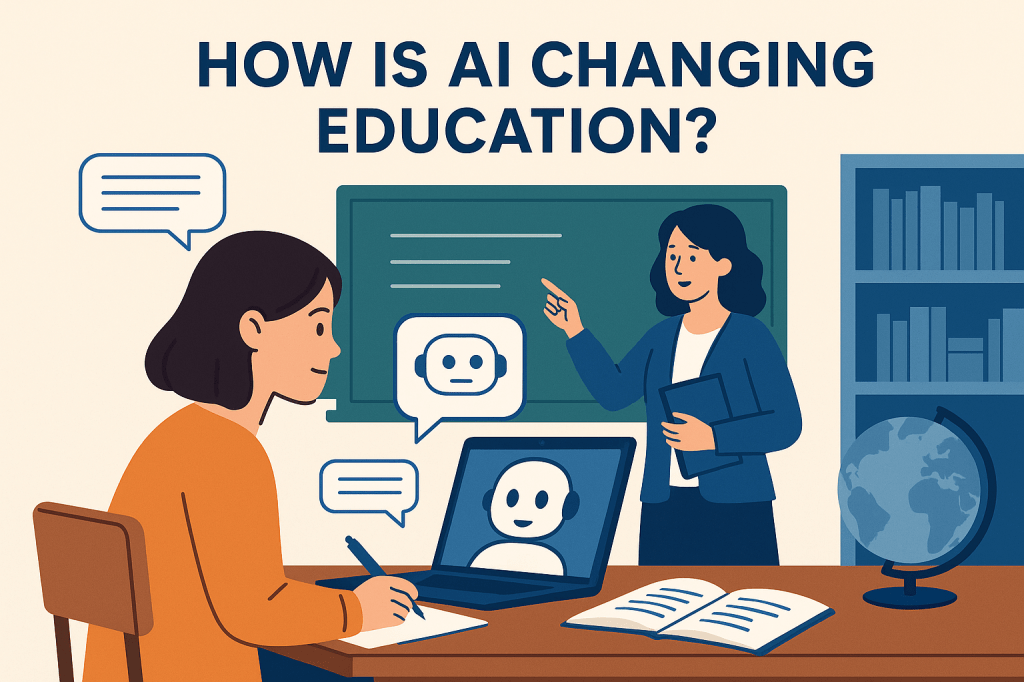
During finals week at a New York university, sophomore Emily used ChatGPT not to “cheat,” but to break down dense economics readings into bite-sized summaries. For her, AI wasn’t a shortcut—it was a survival tool. Stories like Emily’s are now common, showing how artificial intelligence is reshaping classrooms worldwide.
Smarter Study Tools for Students
Generative AI has moved from novelty to necessity. Surveys show that nearly 90% of college students have used tools like ChatGPT to support assignments. Today, platforms even offer study modes designed to spark critical thinking instead of just delivering ready-made answers. This shift highlights AI’s role as a partner in learning rather than a replacement for effort.
Personalized Learning on Demand
AI-powered systems now adapt to each student’s pace and skill level. For example, schools in Australia using Education Perfect reported a 47% boost in student response quality with AI’s instant feedback. Adaptive learning platforms track progress in real time, ensuring struggling students get extra support while advanced learners keep moving forward.
Teachers Save Time, Gain Insights
Rather than replacing teachers, AI is helping them. In the U.S., 60% of K–12 educators used AI last year, saving up to six hours weekly on grading and lesson planning. Major investments, including a $23 million partnership with top AI companies, are funding training programs so teachers can apply these tools responsibly. The result: more time for meaningful student interactions.
Universities Prioritize AI Literacy
Colleges aren’t standing still. Institutions like MIT, Columbia, and NYU are embedding AI into their programs, from leadership pathways to hands-on AI fluency workshops. Experts argue that a third of college coursework should focus on teaching students how to collaborate with AI, preparing them for a workforce where these skills are essential.
Ethical Challenges Remain
Despite the promise, challenges persist. Concerns about plagiarism, misinformation, and bias fuel debates on how AI should be used. Some professors still favor handwritten essays, while others push for AI literacy as a core competency. Interestingly, while 87% of students use AI, nearly half also fear the risks of misuse—underscoring the need for balance.
Essential Insights
AI is transforming education by personalizing learning, boosting teacher productivity, and shaping new academic skills. The key lies in responsible integration—where technology empowers students and educators while protecting the integrity of education itself.

Leave a comment