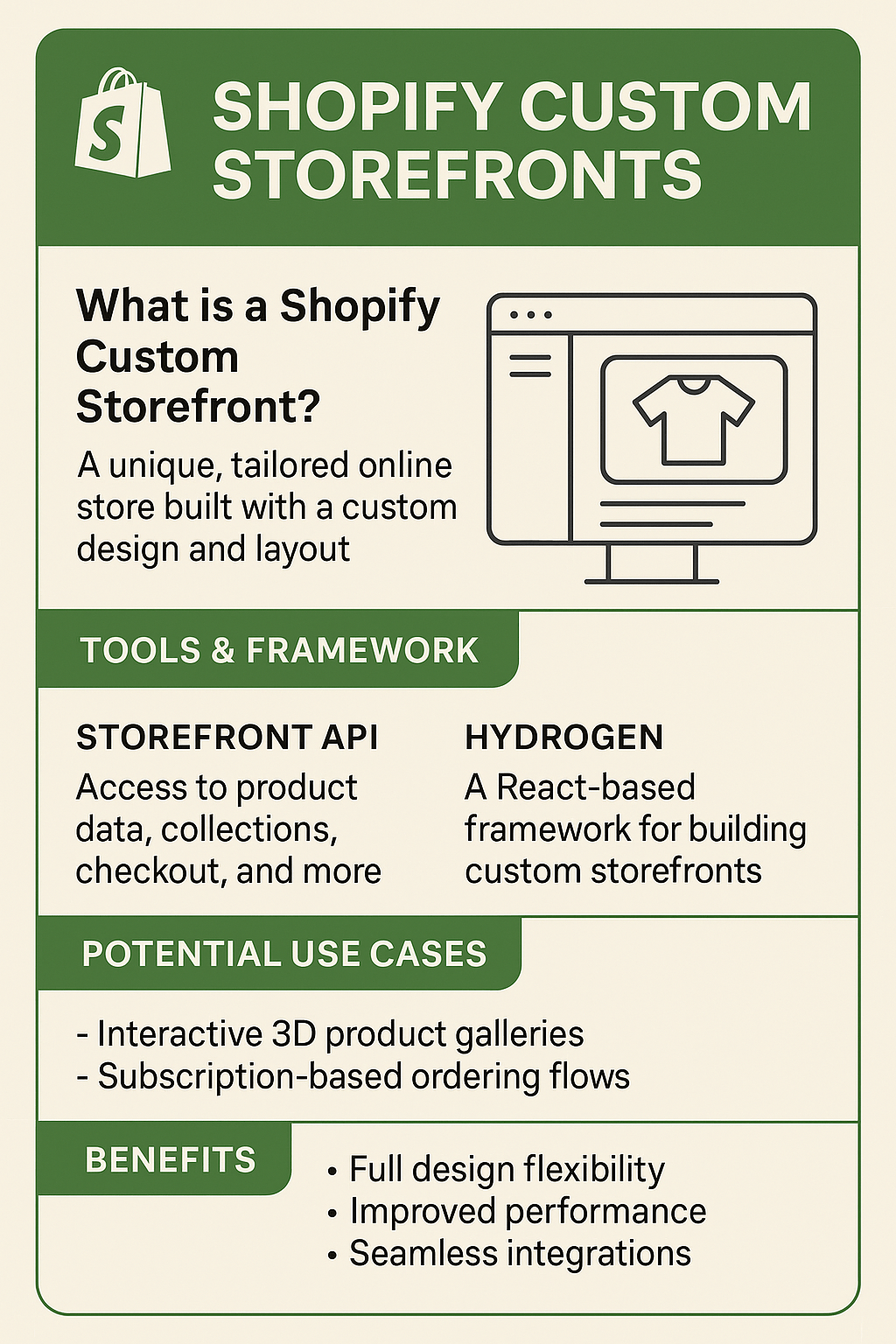
Imagine walking into a store where everything—layout, colors, shelves, even the way products are shown—was designed exactly the way the owner wanted, not following a standard template. That’s what a Shopify Custom Storefront is in the digital world.
Most businesses use Shopify’s default themes to create their online stores. They’re quick and simple, like using pre-made furniture. But what if you want your store to look and behave in a completely unique way? That’s where custom storefronts come in. Instead of being locked into templates, you can design every detail—from how products are displayed to how customers check out.
Shopify offers tools like the Storefront API and Hydrogen (its React-based framework) to make this possible. Think of the Storefront API as the toolbox: it gives you access to product data, collections, and checkout features. Hydrogen, on the other hand, is like the set of building blocks that helps developers build faster, high-performance custom storefronts. Together, they let you build experiences that feel more like a branded app or magazine than a regular online shop.
For example, a sneaker brand could design an interactive 3D gallery of shoes, or a coffee company might build a subscription-based ordering flow tailored to its customers. These kinds of experiences aren’t possible with just standard Shopify themes.
The main benefits? Flexibility in design, better performance, and the ability to integrate seamlessly with other platforms or apps. The trade-off is that custom storefronts require more technical skills, often involving developers.
In short, Shopify Custom Storefronts give businesses the power to stand out online with experiences that go far beyond cookie-cutter templates. As online shopping keeps evolving, expect more brands to adopt this approach to create stores that feel not just functional, but truly unforgettable.

Leave a comment