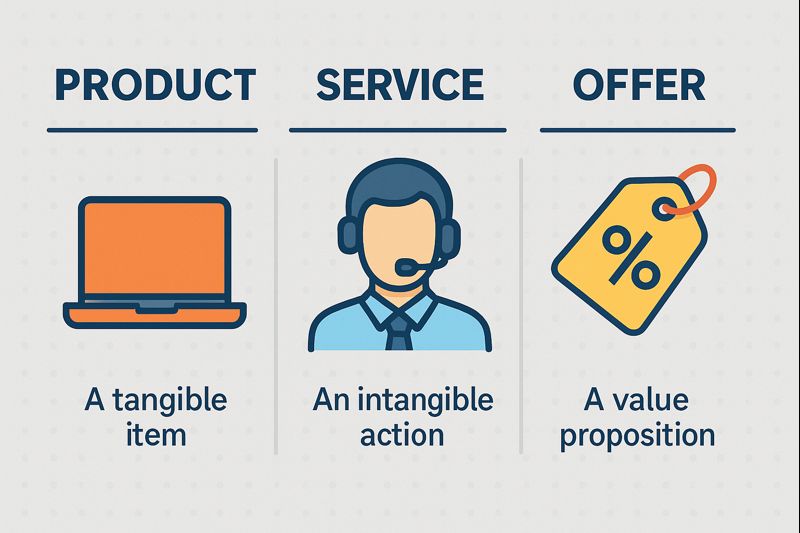
Understanding the difference between a product, a service, and an offer is important for anyone involved in business, marketing, or even everyday buying decisions. Although these words are often used together, they each mean something slightly different. Let’s break them down in a simple and conversational way.
1. What Is a Product?
A product is something physical or tangible that you can touch, hold, or use. It has a physical form and is usually produced in factories or created through a manufacturing process.
Examples of products:
- A smartphone
- A laptop
- A water bottle
- A pair of shoes
Key features of a product:
- Tangible (you can touch it)
- Can be stored and reused
- Quality remains the same once produced
Example: If you buy a laptop, you receive the exact item and can use it anytime. It doesn’t change based on who sells it to you.
2. What Is a Service?
A service is an activity or action that someone performs for you. It is intangible, meaning you cannot touch or store it. A service only exists while it is being performed.
Examples of services:
- A haircut
- A taxi ride
- Online tutoring
- House cleaning
Key features of a service:
- Intangible (cannot be touched)
- Cannot be stored for later
- Quality depends on the person delivering it
Example: A haircut is a service because the barber is performing an action for you. You cannot “store” a haircut—it happens in the moment.
3. What Is an Offer?
An offer is a combination of value presented to customers. It can include:
- A product
- A service
- Or both together
An offer is what a business presents to attract a customer. It usually includes price, bonuses, features, and sometimes discounts or packages.
Examples of offers:
- “Buy a smartphone and get free earphones.”
- “Get 20% off on all cleaning services this weekend.”
- “Subscribe now and receive a free coaching session.”
Key features of an offer:
- A marketing message or deal
- Designed to persuade customers
- Can be changed frequently (e.g., discounts, bundles, promotions)
Example: If you buy a smartphone and the shop gives you a free cover, that is an offer. The phone (product) and the free cover (bonus) together form the offer.
4. Simple Comparison Table
| Category | Product | Service | Offer |
|---|---|---|---|
| Tangibility | Physical | Not physical | Can include product/service |
| Can it be stored? | Yes | No | Depends on components |
| What is it? | An item | An action | A deal or package |
| Purpose | To fulfill a need | To provide support or help | To attract and convert customers |
5. Putting It All Together
Imagine you go to buy a gym membership.
- The gym equipment (treadmills, dumbbells) = Product
- The training sessions offered by a coach = Service
- A discounted yearly membership with a free diet plan = Offer
This makes it easy to see that an offer is simply the final combination presented to you to make the purchase more appealing.
6. Why Businesses Use All Three
Businesses use products, services, and offers to:
- Increase customer interest
- Stand out from competitors
- Provide more value
- Improve sales
For example, a mobile company may sell phones (products), offer customer support (service), and give a discount bundle (offer).
In simple words:
- Product = What you can touch
- Service = What someone does for you
- Offer = The deal you are given
Understanding this difference helps both customers and business owners make smarter decisions.

Leave a comment