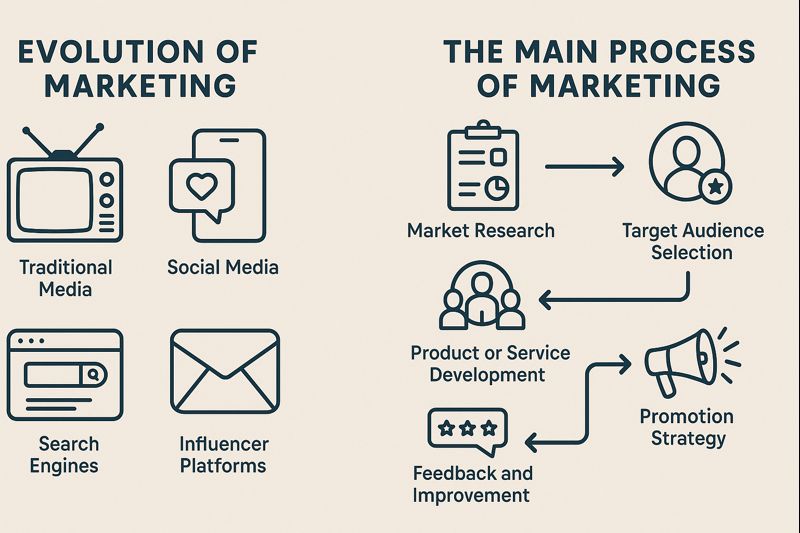
Marketing is never a one-size-fits-all activity. As technology changes and new platforms emerge, marketing methods also adapt. The way brands promoted products 20 years ago is very different from how they do it today. Each platform—whether TV, social media, email, or search engines—requires its own style, tone, and strategy. Understanding how marketing evolves across platforms helps businesses stay relevant and connect with their audience more effectively.
In this article, we’ll look at how marketing techniques change with different platforms and explore the main process of marketing in simple, beginner-friendly terms.
How Marketing Techniques Evolve Across Different Platforms
Marketing adapts based on where the audience spends their time. Each platform has its own strengths, limitations, and user behavior patterns.
1. Traditional Media (TV, Radio, Print)
Traditional platforms focus on mass audiences and broad messaging.
- TV and radio ads aim to capture attention within seconds.
- Print ads rely on strong visuals and headlines.
- The goal is usually brand awareness.
For example, a soft drink company might run a TV commercial showing families enjoying their product during a picnic. This appeals to emotions and builds wide recognition.
2. Social Media Platforms
Social media has transformed marketing by allowing two-way communication. People don’t just receive messages—they respond to them.
- Instagram: Visual storytelling through images and short videos.
- TikTok: Fun, fast, and creative content.
- Facebook: Community building and targeted ads.
Brands use social media to engage, entertain, and build relationships. For instance, a clothing brand may use TikTok challenges to reach younger audiences.
3. Search Engines (Google, Bing)
Search engine marketing focuses on intent-based marketing.
- SEO helps brands appear in search results naturally.
- Paid ads (PPC) place businesses at the top of search pages.
- Content is usually informational and keyword-focused.
Example: A bakery might write blog posts like “How to Make Soft Cupcakes” to bring in people searching for baking tips.
4. Email Marketing
Email is all about personalization.
- Brands send tailored messages, offers, and updates.
- Email lists target people who already showed interest.
- It builds long-term customer relationships.
For example, an online store might email product recommendations based on past purchases.
5. Influencer Platforms
Influencer marketing has grown as people trust real voices more than ads.
- Micro-influencers promote small brands to niche audiences.
- Celebrity influencers target larger groups.
- Content feels more authentic and relatable.
A skincare brand may partner with a beauty influencer who shares their honest experience.
The Main Process of Marketing: Step-by-Step
Marketing follows a clear process that helps businesses understand customers and deliver value.
1. Market Research
This is the foundation. Businesses study what customers need, what competitors offer, and market trends.
2. Target Audience Selection
Not everyone is the ideal customer. Companies choose specific groups to focus on based on age, interests, behavior, and needs.
3. Product or Service Development
Businesses create products that solve customer problems. This includes packaging, pricing, and quality.
4. Promotion Strategy
This is where platform-specific marketing comes in.
- Choosing the right platforms
- Creating engaging content
- Planning ads, campaigns, and messages
5. Distribution (Place)
Brands decide how to deliver the product—online stores, physical shops, or both.
6. Feedback and Improvement
After launching, companies collect customer feedback and adjust their strategies.
Key Insights
Marketing continues to evolve as new platforms emerge. The key is understanding how people behave on each platform and tailoring messages accordingly. When brands follow a clear marketing process—research, targeting, product creation, promotion, distribution, and feedback—they stay competitive and build strong relationships with customers.

Leave a comment