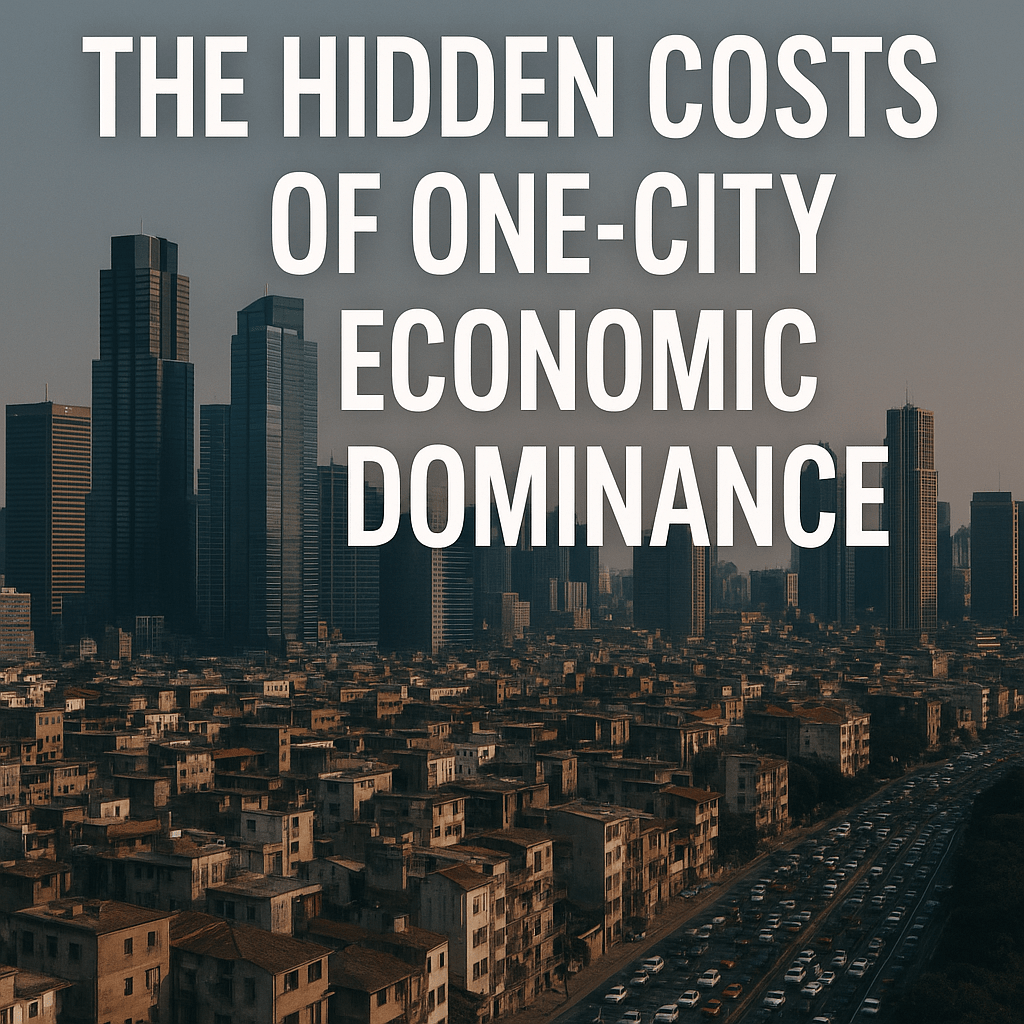
In many countries, most large companies, corporate headquarters, and high-paying jobs are located in just one major city. At first, this may look like a sign of progress and success. That city becomes a business hub, attracts foreign investment, and gains global attention. However, when too much economic power is concentrated in one place, it can create serious long-term problems for the entire country. Below is a clearer and more detailed look at why this model often does more harm than good.
1. Extreme Pressure on Cities and Daily Life
When companies cluster in one city, people from all over the country move there in search of work. Over time, the city becomes overcrowded.
This creates daily challenges such as:
- Heavy traffic and long travel times
- Overloaded public transport
- Shortage of affordable housing
- Strain on water, electricity, and healthcare
For example, workers may spend hours commuting each day, reducing productivity and increasing stress. Cities simply cannot expand fast enough to meet this sudden demand.
2. Soaring Cost of Living
As demand increases, prices rise. Housing, food, transportation, and even basic services become expensive.
Major impacts include:
- Rent and property prices rising sharply
- Ordinary workers struggling to save money
- Young professionals delaying marriage or home ownership
Even well-paid employees feel financial pressure, while low-income workers are often pushed to live far from city centers.
3. Unequal Development Across the Country
When most important companies operate in one city, other regions receive little attention or investment.
This leads to:
- Fewer jobs in smaller cities and towns
- Poor infrastructure outside major urban areas
- Growing economic inequality
As a result, one city becomes wealthy and modern, while other regions fall behind, creating a divided nation.
4. Talent Drain from Smaller Cities and Rural Areas
Skilled workers such as engineers, doctors, and managers often leave their hometowns to work in major cities.
This causes:
- Loss of talent in smaller communities
- Slower local business growth
- Reduced innovation outside big cities
Local industries struggle to develop when educated professionals are no longer available.
5. Greater Economic Risk and Vulnerability
When a country depends heavily on one city for business and finance, any disruption there can affect the entire nation.
Possible threats include:
- Natural disasters
- Political unrest or protests
- Power outages or system failures
If that single city stops functioning, even briefly, national economic activity can slow down significantly.
6. Environmental and Health Problems
High concentration of offices, factories, and vehicles in one city damages the environment.
Common issues include:
- Poor air quality
- Water pollution
- Lack of green spaces
These environmental problems often lead to health issues such as breathing problems, fatigue, and mental stress among residents.
7. Lost Opportunities for Balanced Growth
Many regions offer advantages such as lower land costs, available labor, and untapped markets. By focusing on just one city, companies miss these benefits.
Spreading businesses across multiple cities can:
- Reduce operating costs
- Create jobs nationwide
- Strengthen local economies
Countries that encourage business growth in different regions often enjoy more stable and inclusive development.
Key Takeaways
Concentrating major companies in a single city may bring short-term gains, but it creates long-term challenges for cities, people, and the national economy. Overcrowding, high living costs, regional inequality, and economic risk are serious drawbacks. A more balanced approach—where businesses are spread across different cities—leads to healthier growth, better quality of life, and a stronger country overall. Governments and companies should work together to promote development beyond just one major urban center.

Leave a comment