In today’s busy world, distractions are everywhere. Emails, social media, meetings, and notifications constantly compete for our attention. As a result, many people feel busy all day but still struggle to get meaningful work done. This is where the time blocking technique can make a big difference.
Time blocking is a simple productivity method where you divide your day into specific blocks of time. Each block is assigned to one task or activity. Instead of working randomly or reacting to interruptions, you follow a clear plan for your day.
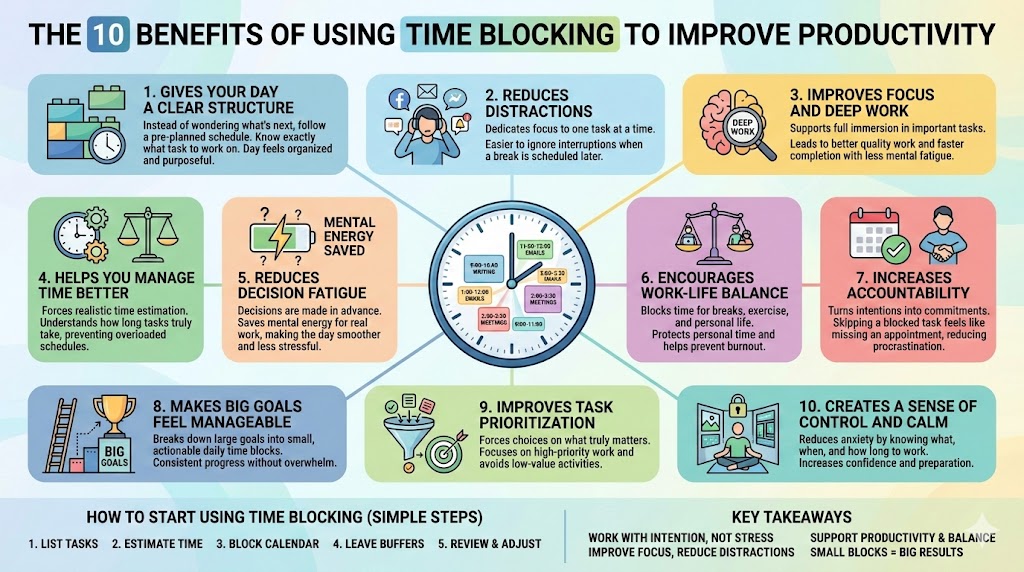
Let’s explore the 10 biggest benefits of using time blocking and how it can help you become more focused, organized, and productive.
1. Gives Your Day a Clear Structure
One of the biggest benefits of time blocking is structure. Instead of wondering what to work on next, your day already has a plan.
With time blocking:
- You know exactly what task you’ll work on
- You avoid jumping between tasks
- Your day feels organized and purposeful
For example, instead of “working on projects all day,” you might block 9:00–10:30 for writing, 11:00–12:00 for emails, and 2:00–3:30 for meetings.
2. Reduces Distractions
Distractions are productivity killers. Time blocking helps reduce them by giving your brain one clear focus at a time.
When you know:
- What task you’re working on
- How long you’ll work on it
…it becomes easier to ignore notifications, messages, and random thoughts. You’re less likely to check social media when you know you have a dedicated break later.
3. Improves Focus and Deep Work
Time blocking supports deep, focused work. When you block time for important tasks, you give them your full attention.
Benefits include:
- Better quality work
- Faster task completion
- Less mental fatigue
For example, blocking 90 minutes for writing allows you to fully immerse yourself without constantly switching tasks.
4. Helps You Manage Time Better
Many people underestimate how long tasks take. Time blocking forces you to be realistic about your time.
Over time, you’ll:
- Understand how long tasks truly take
- Stop overloading your schedule
- Plan your day more accurately
This awareness alone can significantly improve your time management skills.
5. Reduces Decision Fatigue
Decision fatigue happens when you make too many small decisions throughout the day. “What should I work on next?” is one of them.
With time blocking:
- Decisions are made in advance
- You simply follow the schedule
- Your mental energy is saved for real work
This makes your day feel smoother and less stressful.
6. Encourages Work-Life Balance
Time blocking isn’t just for work tasks. You can also block time for:
- Breaks
- Exercise
- Family time
- Personal projects
By scheduling personal time, you protect it from being eaten up by work. This creates a healthier balance and helps prevent burnout.
7. Increases Accountability
When tasks are written into your schedule, they feel more real and harder to ignore.
Time blocking:
- Turns intentions into commitments
- Makes procrastination more obvious
- Helps you stay consistent
If a task is blocked from 10:00–11:00, skipping it feels like skipping an appointment.
8. Makes Big Goals Feel Manageable
Large goals can feel overwhelming. Time blocking breaks them down into small, actionable steps.
For example:
- Instead of “write a book”
- You block 30 minutes daily for writing
Over time, these small blocks add up to big results without feeling stressful.
9. Improves Task Prioritization
Time blocking forces you to decide what truly matters. Since your day has limited hours, you must choose which tasks deserve your time.
This helps you:
- Focus on high-priority work
- Avoid low-value activities
- Align your day with your goals
You stop reacting to tasks and start acting with intention.
10. Creates a Sense of Control and Calm
Finally, time blocking gives you control over your day. Instead of feeling rushed or scattered, you feel calm and prepared.
Knowing:
- What you’re working on
- When you’ll work on it
- When you’ll rest
…reduces anxiety and increases confidence in your ability to handle your workload.
How to Start Using Time Blocking (Simple Steps)
If you’re new to time blocking, start small:
- List your daily tasks
- Estimate how long each task takes
- Block time in your calendar
- Leave buffer time between tasks
- Review and adjust daily
You don’t need a perfect schedule. Flexibility is part of the process.
Key Takeaways
- Time blocking helps you work with intention, not stress
- It improves focus, reduces distractions, and saves mental energy
- It supports both productivity and work-life balance
- Small, consistent time blocks lead to big results
By using time blocking regularly, you can take control of your time and make every day more productive and meaningful.

Leave a comment