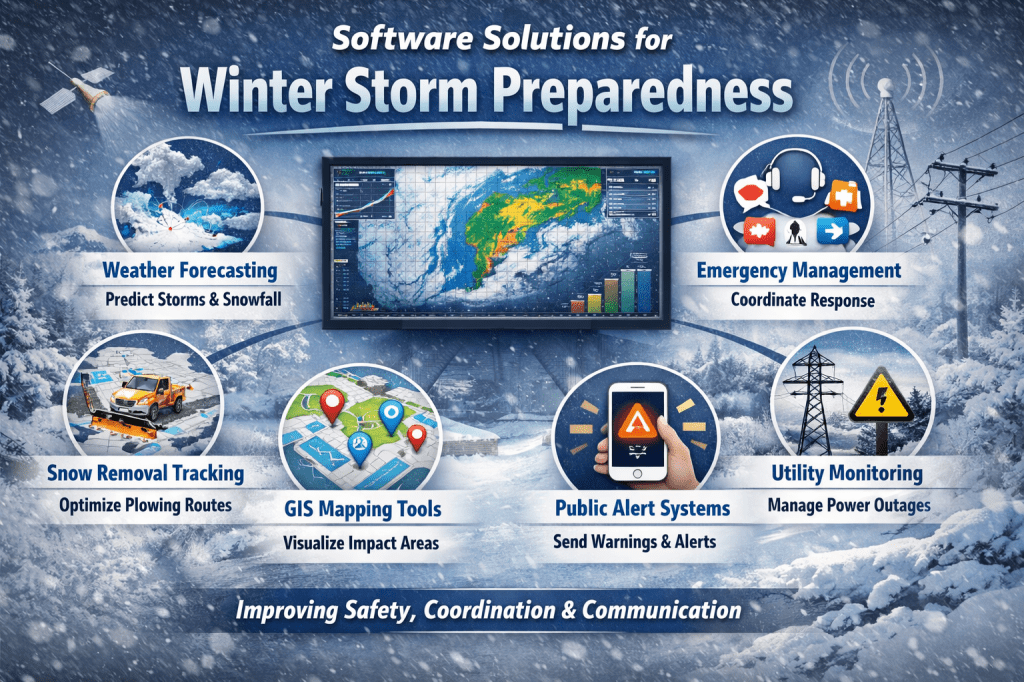
Winter storms can disrupt entire regions within hours. Roads become unsafe, power grids fail, supply chains break, and emergency services are pushed to their limits. While snow and ice are natural events, the chaos they create doesn’t have to be.
Today, software solutions play a critical role in helping governments, businesses, and communities prepare for, respond to, and recover from winter storms more effectively. From weather forecasting to emergency coordination, the right technology can save time, money, and lives.
This article breaks down the most important software solutions for winter storms, explained clearly from a beginner’s perspective.
Why Software Matters During Winter Storms
A winter storm is not just a weather problem—it’s a logistics and decision-making problem.
Authorities must answer questions like:
- Where will the storm hit hardest?
- Which roads should be closed first?
- How do we deploy snowplows efficiently?
- How do we communicate real-time updates to the public?
Software helps turn massive amounts of data into clear, actionable decisions when time is critical.
Weather Forecasting & Predictive Analytics Software
Accurate forecasting is the foundation of winter storm preparedness.
Modern weather software uses:
- Satellite data
- Radar systems
- Machine learning models
- Historical weather patterns
Organizations like National Oceanic and Atmospheric Administration and IBM provide advanced forecasting platforms that predict:
- Snowfall intensity
- Ice accumulation
- Wind chill dangers
- Storm duration
Why it matters:
Better forecasts give cities and businesses more lead time, allowing them to stage equipment, warn citizens, and reduce last-minute panic.
Emergency Management & Incident Response Platforms
When a storm hits, coordination becomes the biggest challenge.
Emergency management software helps:
- Coordinate police, fire, medical, and utility teams
- Track incidents in real time
- Allocate resources efficiently
- Maintain a shared operational picture
Popular systems are used by municipalities and disaster agencies to ensure everyone works from the same information.
Key benefit:
Instead of scattered phone calls and spreadsheets, responders rely on a central command system that updates instantly.
Road Maintenance & Snow Removal Management Software
Clearing roads quickly can mean the difference between safety and disaster.
Snow management software allows cities to:
- Track snowplow locations via GPS
- Optimize plowing routes
- Monitor salt and de-icing material usage
- Prioritize critical roads like hospitals and highways
These systems reduce fuel costs, prevent overlap, and ensure no area is forgotten during long storms.
Real-world impact:
Cities using route-optimization software often clear roads faster with fewer vehicles.
Utility & Power Grid Management Systems
Winter storms frequently cause power outages due to ice buildup and falling trees.
Utility software helps by:
- Detecting outages automatically
- Pinpointing failure locations
- Prioritizing restoration zones
- Communicating updates to customers
Smart grid systems reduce outage time and improve transparency, especially when thousands of households are affected.
Why this matters:
Restoring power quickly during freezing conditions can literally save lives.
GIS Mapping & Visualization Tools
Geographic Information Systems (GIS) turn raw data into visual maps that are easy to understand.
Platforms like Esri help organizations:
- Map storm impact zones
- Visualize road closures
- Track emergency shelters
- Identify high-risk populations
Simple analogy:
GIS software is like Google Maps for emergency decision-makers—showing what’s happening and where, all at once.
Public Communication & Alert Systems
Clear communication saves lives during winter storms.
Alert software allows authorities to:
- Send SMS and mobile alerts
- Push evacuation or shelter instructions
- Share real-time road and weather updates
- Reduce misinformation and panic
These systems ensure that accurate information reaches people quickly, even during power or internet disruptions.
Business Continuity & Risk Management Software
For businesses, winter storms can halt operations overnight.
Business continuity platforms help companies:
- Identify operational risks
- Plan remote work strategies
- Secure supply chains
- Maintain customer communication
Retailers, logistics firms, and e-commerce businesses rely on these tools to stay operational despite severe weather.
Key Takeaways
- Winter storms are complex events requiring fast, data-driven decisions
- Software solutions improve forecasting, coordination, and response speed
- Emergency management, GIS, and alert systems work together as a unified ecosystem
- Businesses and governments alike benefit from proactive digital preparedness
As climate patterns become more unpredictable, investing in the right software is no longer optional—it’s essential.
If you’re interested in how technology, communication, and smart systems create resilience—not just in emergencies but in everyday life—you may find valuable insights in my books on business strategy, personal growth, and practical decision-making, available on Apple Books.

Leave a comment