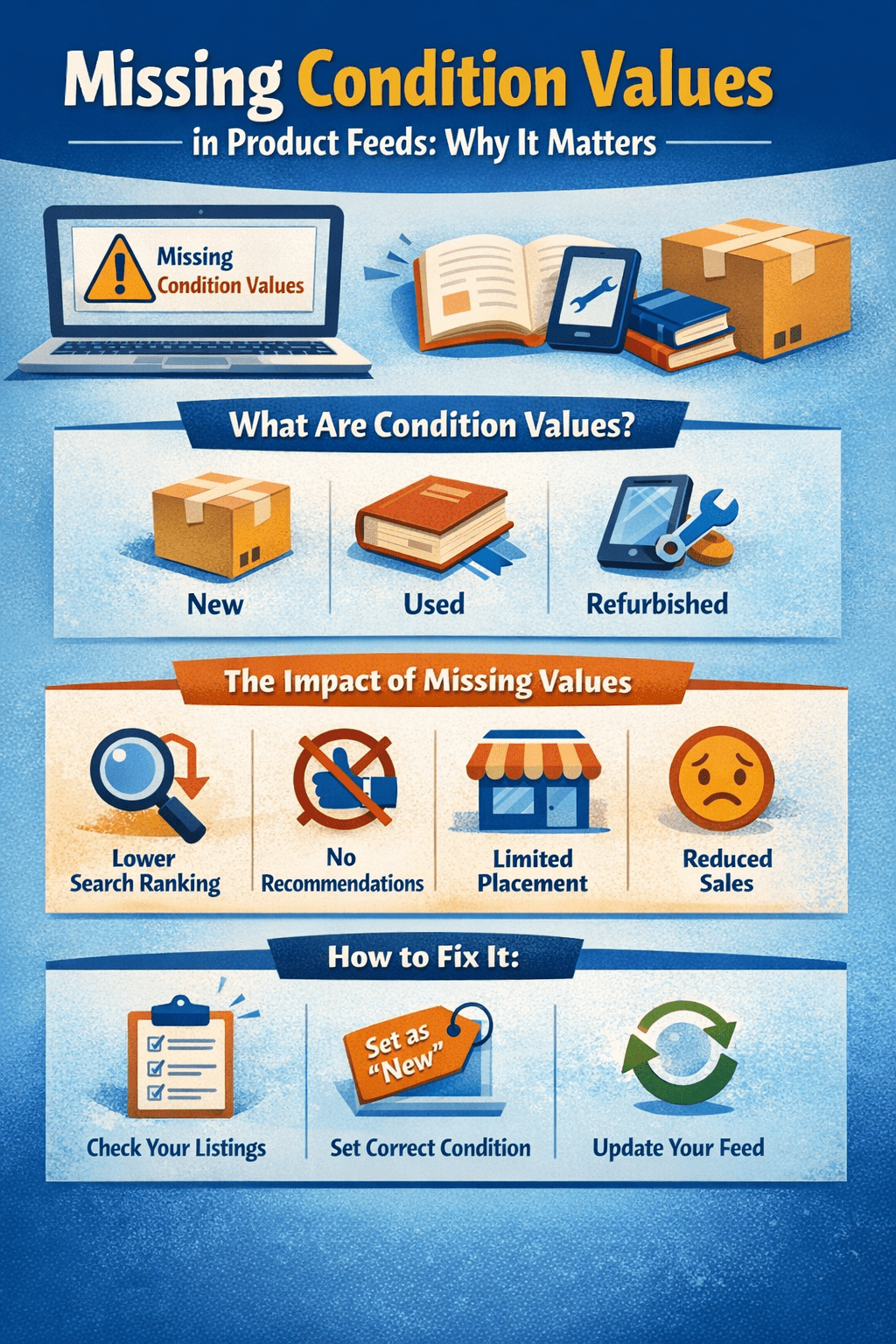
If you manage digital products, books, or physical items on an online marketplace, you may have seen a warning like this:
“Some condition values are missing, which may limit visibility in recommendations, search results, and shopping experiences.”
At first glance, this message feels technical and vague. But it’s actually pointing to a very practical issue—one that can directly affect how often your products are shown to customers.
Let’s break this down in simple terms, using real-world examples, and explain exactly why it matters and how to fix it.
What Are “Condition Values” in Simple Terms?
A condition value tells a platform what state your product is in.
Most marketplaces expect each product to be labeled as one of the following:
- New
- Used
- Refurbished
This helps the platform decide:
- Where to show your product
- Who to recommend it to
- How to rank it in search results
Think of condition values like a label on a store shelf. Without that label, the platform doesn’t know how to properly present your item.
Why Platforms Care So Much About Product Condition
Online marketplaces are built around trust and clarity.
When shoppers browse, they expect to immediately know:
- Is this item brand new?
- Has it been used before?
- Is it refurbished or updated?
If that information is missing, platforms hesitate to fully promote the product. They don’t want to confuse buyers or create poor shopping experiences.
So instead of rejecting your product outright, the platform quietly limits its exposure.
What the Warning Is Really Telling You
When you see a warning saying “Some condition values are missing”, here’s what it means behind the scenes:
- Your products are still listed
- They are not optimized for visibility
- The platform may exclude them from recommendations
- They may appear lower in search results
- Some shopping features may not work properly
In short: your products are invisible to part of your potential audience
Why This Happens So Often (Especially With Digital Products)
This issue is extremely common for:
- eBooks
- PDFs
- Digital downloads
- Self-published content
- Automated product feeds
Why?
Because many creators assume:
“It’s digital—condition doesn’t apply.”
But platforms still expect a condition value, even for digital items.
For example:
- An eBook should almost always be marked as New
- A revised edition may still count as New
- A re-uploaded or updated file is not “Used”
If the condition field is left empty or labeled incorrectly, the system flags it.
How Missing Condition Values Affect Visibility
Here’s how this one small detail can ripple outward:
1. Reduced Search Rankings
Products with complete data are prioritized. Missing fields = lower confidence = lower ranking.
2. Fewer Recommendations
Recommendation engines rely on structured data. If key fields are missing, your product is skipped.
3. Limited Shopping Placements
Some curated sections only show items with full, compliant data.
4. Lower Conversion Rates
Even if a product appears, missing information can reduce buyer trust.
All of this happens silently—no error messages, no alerts to customers.
How to Fix the Issue (The Right Way)
The solution is straightforward, but it must be done correctly.
Step 1: Review Affected Products
Identify which items show “no data” under condition.
Step 2: Assign the Correct Condition
Use one of the accepted values:
- New → Most digital products and first-time listings
- Used → Physical items previously owned
- Refurbished → Updated or restored physical goods
For digital books and guides, New is almost always the correct choice.
Step 3: Keep Formatting Consistent
Platforms often require exact wording. Avoid:
- Custom labels
- Extra descriptions
- Variations like “Brand New” instead of “New”
Step 4: Update Before the Next Feed Refresh
Once corrected, visibility improvements usually follow in the next update cycle.
Why This Small Detail Has a Big Impact
Product feeds are not judged emotionally—they’re judged by data completeness.
From the platform’s perspective:
- Complete data = reliable product
- Missing data = risk
Even high-quality content can underperform if its metadata is incomplete.
This is why creators sometimes feel their products are “stuck” or “not moving,” even when the content itself is strong.
What This Means for You
If you’re selling knowledge-based products—like parenting guides, business books, or digital learning resources—your success depends on both content quality and technical clarity.
Fixing condition values won’t magically create sales overnight, but it removes an invisible barrier that’s holding your products back.
It’s one of those small optimizations that quietly compounds over time.
If you’re interested in building digital products, improving visibility, or understanding how platforms actually work behind the scenes, you may also find value in my books on business, communication, and personal development available on Apple Books.
Key Takeaways
- Condition values tell platforms how to classify your product
- Missing condition data reduces visibility and recommendations
- Digital products should almost always be marked as New
- This is a data issue—not a quality issue
- Fixing it improves discoverability without changing your content

Leave a comment