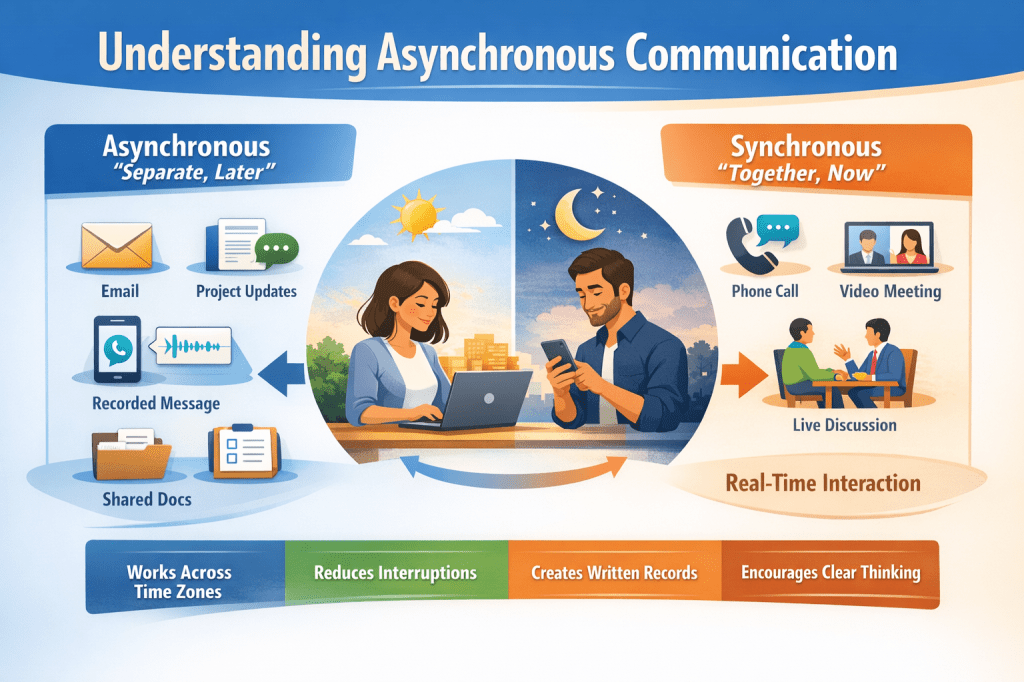
Asynchronous communication is a way of sharing information where people don’t have to respond at the same time. One person sends a message, and the other replies whenever it fits their schedule—minutes, hours, or even days later.
In a world of remote work, global teams, and nonstop notifications, asynchronous communication has become one of the most important skills for modern work and digital collaboration. Let’s break it down in simple terms and explore why it matters so much today.
Understanding Asynchronous Communication (In Simple Terms)
Think of asynchronous communication like leaving a note on someone’s desk.
You write the message, walk away, and trust that the other person will read it and respond when they’re ready.
Common examples include:
- Recorded video messages
- Project management comments
- Discussion boards
- Shared documents with notes
The key idea is no real-time pressure.
You don’t need both people present at the same moment for communication to happen.
Asynchronous vs. Synchronous Communication
To understand asynchronous communication better, it helps to compare it with synchronous communication.
Synchronous Communication
This happens in real time.
- Phone calls
- Live meetings
- Video conferences
- Face-to-face conversations
Everyone must be available at the same time.
Asynchronous Communication
This happens on a delay.
- Emails
- Task updates
- Voice notes
- Recorded presentations
People respond when it’s convenient.
A simple way to remember the difference:
- Synchronous = together, now
- Asynchronous = separate, later
Why Asynchronous Communication Is So Important Today
Asynchronous communication isn’t just a trend—it solves real problems in modern work.
1. Works Across Time Zones
When teams are spread across countries, real-time meetings become difficult. Asynchronous communication allows people to contribute without staying up late or waking up early.
2. Reduces Interruptions
Constant meetings and messages break focus. Async communication lets people respond when they’re mentally ready, leading to deeper thinking and better work.
3. Encourages Clear Thinking
Since you can’t rely on instant back-and-forth, messages tend to be more thoughtful, structured, and clear.
4. Creates Written Records
Async communication leaves a paper trail. This makes it easier to:
- Track decisions
- Onboard new team members
- Avoid misunderstandings
Common Tools Used for Asynchronous Communication
Many popular digital tools are designed specifically for async work.
- Slack – Channels and messages that don’t require instant replies
- Email platforms – Ideal for detailed, non-urgent communication
- GitHub – Comments, pull requests, and issue tracking
- Project management tools – Task updates and discussions
- Shared documents – Comments and suggestions over time
Even voice notes and recorded screen walkthroughs are powerful async tools.
Real-Life Examples of Asynchronous Communication
Let’s look at a few everyday scenarios.
Remote Work Example
A manager records a short video explaining a new process. Team members watch it when they start their workday and leave questions in the comments.
Online Learning Example
A student posts a question on a course forum. The instructor responds later with a detailed explanation.
Business Collaboration Example
A designer uploads mockups and leaves notes. The client reviews them the next morning and provides feedback.
No one had to pause their day for a meeting.
Best Practices for Effective Asynchronous Communication
Async communication works best when done intentionally.
Be Clear and Complete
Since you won’t be there to explain instantly:
- Provide context
- State expectations clearly
- Include deadlines when needed
Use Structured Messages
Break long messages into:
- Bullet points
- Headings
- Short paragraphs
This makes them easier to read and respond to.
Set Response-Time Expectations
Let people know whether a reply is expected:
- Within a few hours
- By end of day
- In a few days
This reduces anxiety and confusion.
Choose the Right Channel
Not everything should be async. Urgent issues or emotional conversations may still need real-time discussion.
When Asynchronous Communication Is Not Ideal
As powerful as it is, async communication isn’t perfect for every situation.
It may not be the best choice when:
- Immediate decisions are required
- Sensitive topics are involved
- Complex misunderstandings need quick clarification
The smartest teams mix asynchronous and synchronous communication instead of relying on only one style.
What This Means for You
Asynchronous communication gives you control over your time, attention, and energy. Whether you’re working remotely, running a business, or learning online, mastering this style can make you more productive and less stressed.
If you’re interested in improving your communication skills, productivity, and business mindset, you may find valuable insights in my books on personal development, communication, and business strategy available on Apple Books.

Leave a comment