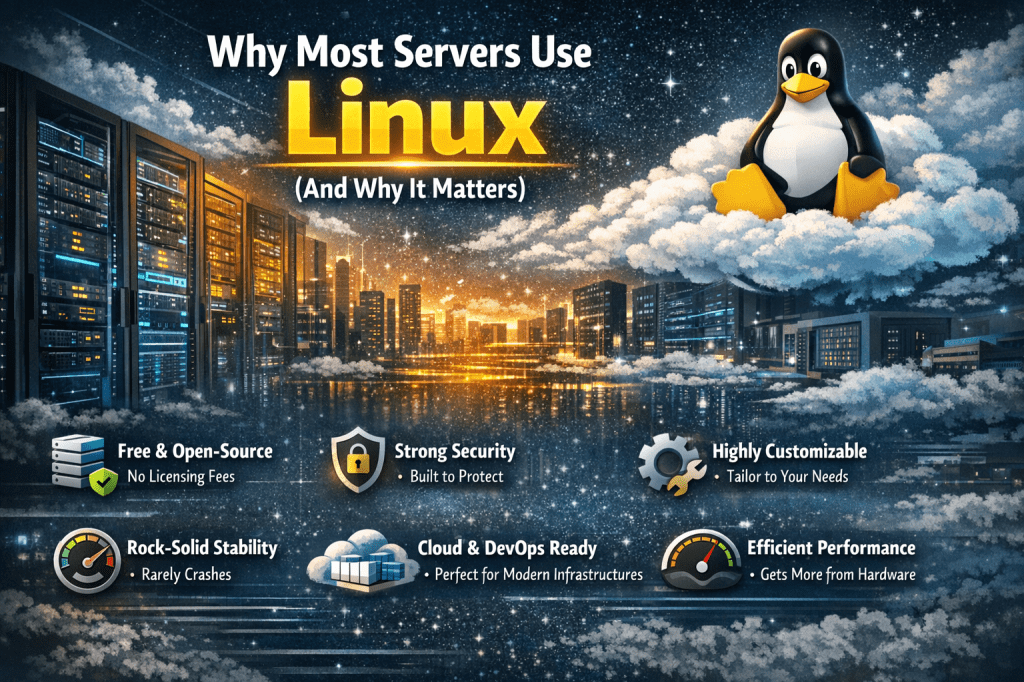
If you’ve ever wondered what powers the internet behind the scenes, the answer is surprisingly consistent: Linux. From websites and mobile apps to cloud platforms and online banking systems, most servers around the world run on Linux.
But why is that the case? With other operating systems available, what makes Linux the default choice for servers?
Let’s break it down in simple terms and understand why Linux dominates the server world.
What Is a Server, Really?
Before diving into Linux, it helps to understand what a server does.
A server is a computer that works 24/7 to provide services like:
- Hosting websites
- Storing databases
- Running apps and APIs
- Managing emails and file systems
Unlike personal computers, servers are built for stability, security, and nonstop performance. And this is exactly where Linux shines.
Linux Is Free and Open-Source
One of the biggest reasons servers use Linux is its cost structure.
Linux is:
- Free to use
- Open-source (anyone can inspect or modify the code)
- Not tied to expensive licensing fees
For companies running hundreds or even thousands of servers, licensing costs add up fast. With Linux, businesses can scale without worrying about per-server fees.
This doesn’t mean Linux is “cheap quality.” In fact, many large enterprises pay for professional Linux support while still benefiting from its open foundation.
Exceptional Stability and Uptime
Servers are expected to run for months or even years without restarting.
Linux is famous for:
- Rare crashes
- Smooth long-term performance
- Stable memory and process management
Many Linux servers only reboot for major updates or hardware changes. This level of reliability is critical for websites, banks, cloud services, and streaming platforms that cannot afford downtime.
In short: Linux stays out of the way and lets servers do their job.
Strong Security by Design
Security is non-negotiable in server environments, and Linux was built with security in mind.
Key advantages include:
- Permission-based system that limits access
- Fewer viruses and malware compared to desktop OSs
- Rapid security patches from a global developer community
- Easy integration with firewalls and security tools
Because Linux is open-source, vulnerabilities are often discovered and fixed faster than in closed systems. Transparency works in Linux’s favor.
Perfect for Customization and Control
Servers often have very specific tasks. Linux allows administrators to:
- Install only what’s needed
- Remove unnecessary components
- Fine-tune performance settings
- Automate tasks using scripts
This flexibility makes Linux ideal for everything from a small blog server to massive cloud infrastructures.
Instead of forcing a “one-size-fits-all” setup, Linux adapts to the server’s purpose.
Dominates Cloud and DevOps Environments
Modern servers don’t exist in isolation. They’re part of cloud platforms and automated systems.
Linux integrates perfectly with:
- Cloud computing
- Containers (like Docker)
- Automation tools
- DevOps workflows
Most cloud providers build their services around Linux because it’s lightweight, efficient, and automation-friendly.
If you’re using a cloud-based app today, chances are it’s running on Linux somewhere.
Massive Community and Enterprise Support
Linux isn’t maintained by a single company—it’s supported by millions of developers worldwide.
This means:
- Endless documentation and tutorials
- Fast bug fixes and improvements
- Proven reliability at massive scale
On top of that, major tech companies offer enterprise-grade Linux versions with professional support, making Linux suitable for both startups and global corporations.
Efficient Use of Hardware Resources
Servers are expensive, and efficiency matters.
Linux is known for:
- Low memory usage
- High performance on modest hardware
- Excellent handling of multiple processes
This allows companies to get more out of their servers without constantly upgrading hardware. Over time, this translates into huge cost savings.
Why Not Other Operating Systems?
Other operating systems can and do run servers, but they often come with trade-offs such as:
- Higher licensing costs
- Less flexibility
- Heavier resource usage
- Slower update cycles
Linux simply checks more boxes for server needs, which is why it became the industry standard.
What This Means for You
Even if you’re not a system administrator, understanding Linux’s role helps you see how the digital world works.
If you’re interested in:
- Web development
- Cloud computing
- Online business
- Technology careers
Learning Linux basics is a smart move. It’s not just a server operating system—it’s the backbone of the modern internet.
And if you’re exploring skills related to business, communication, or digital income, you may also enjoy some practical reads available through my collection on Apple Books, especially those focused on personal growth and online opportunities.
Key Takeaways
- Linux powers the majority of servers worldwide
- It’s free, secure, stable, and highly customizable
- It scales easily from small projects to global platforms
- It’s the foundation of cloud computing and modern infrastructure
Linux isn’t popular by accident—it earned its place by doing one thing extremely well: reliably running the internet.

Leave a comment