For years, we’ve been told the same advice: manage your time better. Use planners, block your calendar, wake up earlier, multitask smarter. Yet despite having more productivity tools than ever, many people still feel exhausted, unfocused, and behind.
The problem isn’t time.
The problem is energy.
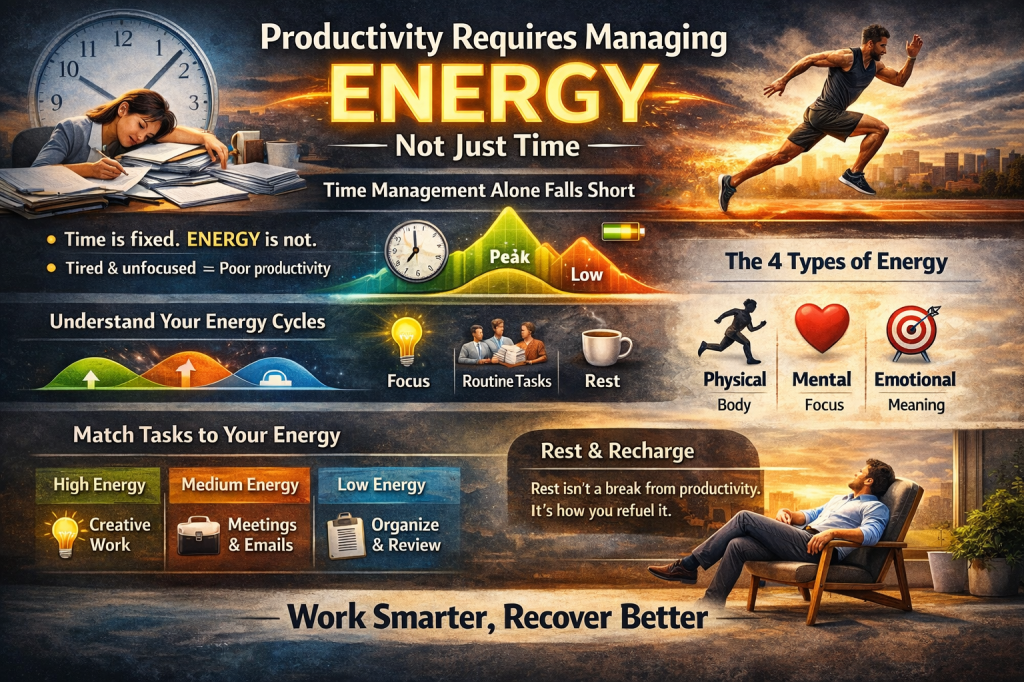
You and a world-class athlete both get 24 hours a day. The difference is not how time is used—but how energy is managed. True productivity comes from understanding when you have energy, how to protect it, and how to renew it.
Let’s break this down in a simple, practical way.
Why Time Management Alone Falls Short
Time is fixed. Energy is not.
You can schedule eight hours of work, but you can’t force eight hours of high-quality focus. Ever noticed how:
- One focused hour can outperform five distracted hours
- You struggle with simple tasks when tired
- Motivation disappears even when deadlines are clear
That’s because productivity is not about doing more things. It’s about doing the right things with the right energy.
Time management assumes all hours are equal. Energy management recognizes they’re not.
Understanding Your Energy Cycles
Your energy rises and falls throughout the day. This is completely natural.
Most people experience:
- Peak energy – high focus, creativity, problem-solving
- Medium energy – good for routine or collaborative work
- Low energy – best for rest, reflection, or simple tasks
Ignoring these cycles is like driving a car without checking fuel levels.
Simple Example
- Writing a report at peak energy: 60 minutes
- Writing the same report when exhausted: 3 frustrating hours
Same task. Same time. Completely different results.
The Four Types of Energy That Drive Productivity
Productivity isn’t powered by just one kind of energy. It’s a system.
1. Physical Energy
This is your foundation.
Low sleep, poor nutrition, and lack of movement drain productivity fast.
Protect it by:
- Sleeping consistently
- Staying hydrated
- Taking short walks or stretching
No amount of motivation can replace a depleted body.
2. Mental Energy
This is your ability to focus and think clearly.
Mental energy drops with:
- Constant notifications
- Multitasking
- Decision overload
Improve it by:
- Working in focused blocks
- Reducing distractions
- Limiting unnecessary decisions
Focus is a finite resource. Spend it wisely.
3. Emotional Energy
How you feel affects how you work.
Stress, frustration, and anxiety quietly drain productivity.
Strengthen it by:
- Setting realistic expectations
- Taking breaks without guilt
- Celebrating small wins
Positive emotions fuel momentum. Negative ones increase resistance.
4. Purpose Energy
This comes from meaning.
When work feels pointless, energy disappears—even if you’re well-rested.
Build it by:
- Connecting tasks to long-term goals
- Knowing why the work matters
- Aligning work with personal values
Purpose turns effort into enthusiasm.
Align Tasks With Energy, Not the Clock
Instead of asking, “What time should I do this?” ask:
“What energy does this task require?”
Energy-Based Task Matching
- High-energy tasks
- Writing
- Strategy
- Learning new skills
- Creative work
- Medium-energy tasks
- Emails
- Meetings
- Admin work
- Low-energy tasks
- Organizing files
- Reviewing notes
- Planning tomorrow
This simple shift can double your output without working longer.
Rest Is Not Laziness—It’s a Strategy
One of the biggest productivity myths is that rest is wasted time.
In reality, rest is energy investment.
Elite performers don’t work nonstop. They work in cycles:
- Intense focus
- Intentional recovery
Short breaks:
- Restore focus
- Reduce errors
- Prevent burnout
Even a 5-minute pause can reset your brain.
Why Hustle Culture Gets Productivity Wrong
Constant hustle treats humans like machines.
Machines can run continuously. Humans can’t.
When you ignore energy:
- Burnout increases
- Creativity drops
- Work quality suffers
Sustainable productivity is not about pushing harder.
It’s about working smarter and recovering better.
How to Start Managing Energy Today
You don’t need a complete life overhaul. Start small.
- Notice when you feel most focused
- Schedule important work during that window
- Protect sleep and breaks
- Reduce distractions
- Stop glorifying exhaustion
Productivity improves when energy is respected.
What This Means for You
If you’ve been feeling unproductive despite “doing everything right,” you’re not broken. You’re just managing the wrong resource.
Time tells you when to work.
Energy determines how well you work.
Once you shift your focus from managing hours to managing energy, productivity becomes easier, more sustainable, and far less stressful.
If you’re interested in building better habits around focus, communication, business, and personal growth, you may find helpful insights in my books available on Apple Books—written to support real-world progress, not hustle burnout.

Leave a comment