If you’ve ever sold products online or managed inventory, you’ve probably come across the term SKU. It sounds technical at first, but once you understand it, you’ll realize it’s one of the simplest and most powerful tools in business.
In this guide, we’ll break down what an SKU is, why it matters, and how you can use it effectively, even if you’re just starting out.
What Does SKU Mean?
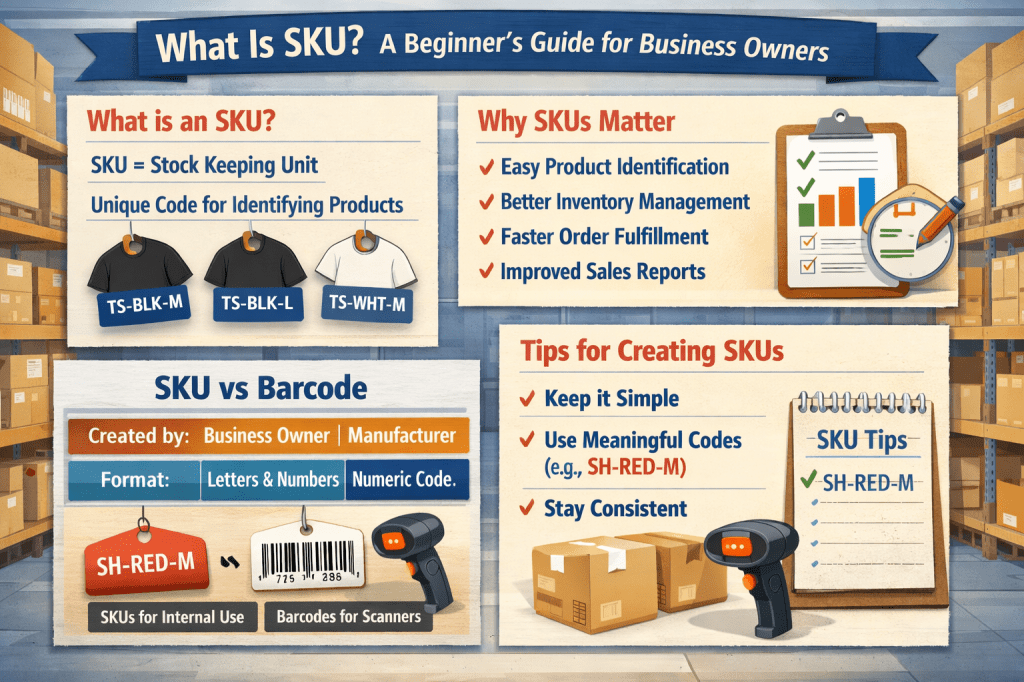
SKU stands for Stock Keeping Unit.
An SKU is a unique code that businesses use to identify, track, and manage individual products in their inventory.
Think of it as a nickname or ID card for a product. Instead of describing a product in full every time, you use an SKU to instantly know exactly what item you’re dealing with.
Simple Example
Let’s say you sell T-shirts:
- Black T-shirt, Medium
- Black T-shirt, Large
- White T-shirt, Medium
Each of these would have a different SKU, even though they’re similar products.
For example:
TS-BLK-MTS-BLK-LTS-WHT-M
Each SKU tells you exactly what the product is.
Why SKUs Are Important
SKUs might seem like small details, but they play a huge role in running a smooth business.
1. Easy Product Identification
Instead of saying:
“That blue cotton shirt in size large”
You just say:
“SKU: SH-BLU-L”
This saves time and avoids confusion.
2. Better Inventory Management
SKUs help you:
- Know how many items you have in stock
- Identify fast-selling products
- Spot slow-moving inventory
Without SKUs, inventory tracking becomes messy very quickly.
3. Faster Order Fulfillment
When an order comes in, warehouse staff or even you (if you’re a solo seller) can quickly pick the exact product using the SKU.
This reduces:
- Shipping errors
- Wrong product deliveries
- Customer complaints
4. Improved Sales and Reporting
SKUs allow you to analyze:
- Which products sell best
- Seasonal trends
- Profit margins per item
This data helps you make smarter business decisions.
SKUs vs Barcodes: What’s the Difference?
Many beginners confuse SKUs with barcodes, but they’re not the same.
| Feature | SKU | Barcode |
|---|---|---|
| Created by | Business owner | Manufacturer |
| Customizable | Yes | No |
| Purpose | Internal tracking | Scanning at checkout |
| Format | Letters + numbers | Numeric lines/code |
Key takeaway:
- SKUs are for you
- Barcodes are for scanners and retailers
You can have both on a product, but they serve different roles.
How to Create an SKU (Step-by-Step)
There’s no universal rule for SKUs, but good SKUs follow a logical system.
Step 1: Keep It Simple
Avoid long, confusing codes. A good SKU is:
- Easy to read
- Easy to remember
- Logical
Step 2: Use Meaningful Segments
A common SKU structure includes:
- Product type
- Color
- Size or variation
Example:
SH-RED-M- SH = Shirt
- RED = Red color
- M = Medium size
Step 3: Stay Consistent
Once you choose a format, stick to it. Consistency makes inventory tracking much easier as your business grows.
Step 4: Avoid Special Characters
Use only:
- Letters
- Numbers
- Dashes (if needed)
Avoid symbols like @, #, %, & as some systems don’t support them.
Where Are SKUs Used?
SKUs are used across many industries, including:
- E-commerce stores (Shopify, Amazon, WooCommerce)
- Retail shops
- Warehouses
- Dropshipping businesses
- Wholesale operations
If a business deals with physical products, SKUs are almost always involved.
Common SKU Mistakes to Avoid
Even though SKUs are simple, beginners often make these mistakes:
- Using random codes with no meaning
- Changing SKU formats frequently
- Reusing old SKUs for new products
- Making SKUs too long
A messy SKU system can create more problems than having no SKUs at all.
Do Small Businesses Really Need SKUs?
Short answer: Yes.
Even if you sell:
- Only 5 products
- On Instagram or WhatsApp
- From home
SKUs help you stay organized and prepare for growth. Starting early saves you headaches later.
Key Takeaways
- An SKU (Stock Keeping Unit) is a unique product identifier
- SKUs make inventory management easier and faster
- They reduce errors and improve order fulfillment
- Creating SKUs is simple if you follow a clear system
- Even small businesses benefit from using SKUs
Once you set them up properly, SKUs quietly work in the background, keeping your business organized and scalable.
If you’re interested in learning more about business systems, e-commerce, communication, and personal growth, you may find practical insights in my collection of books on Apple Books that are designed to help entrepreneurs think clearly and grow confidently.

Leave a comment