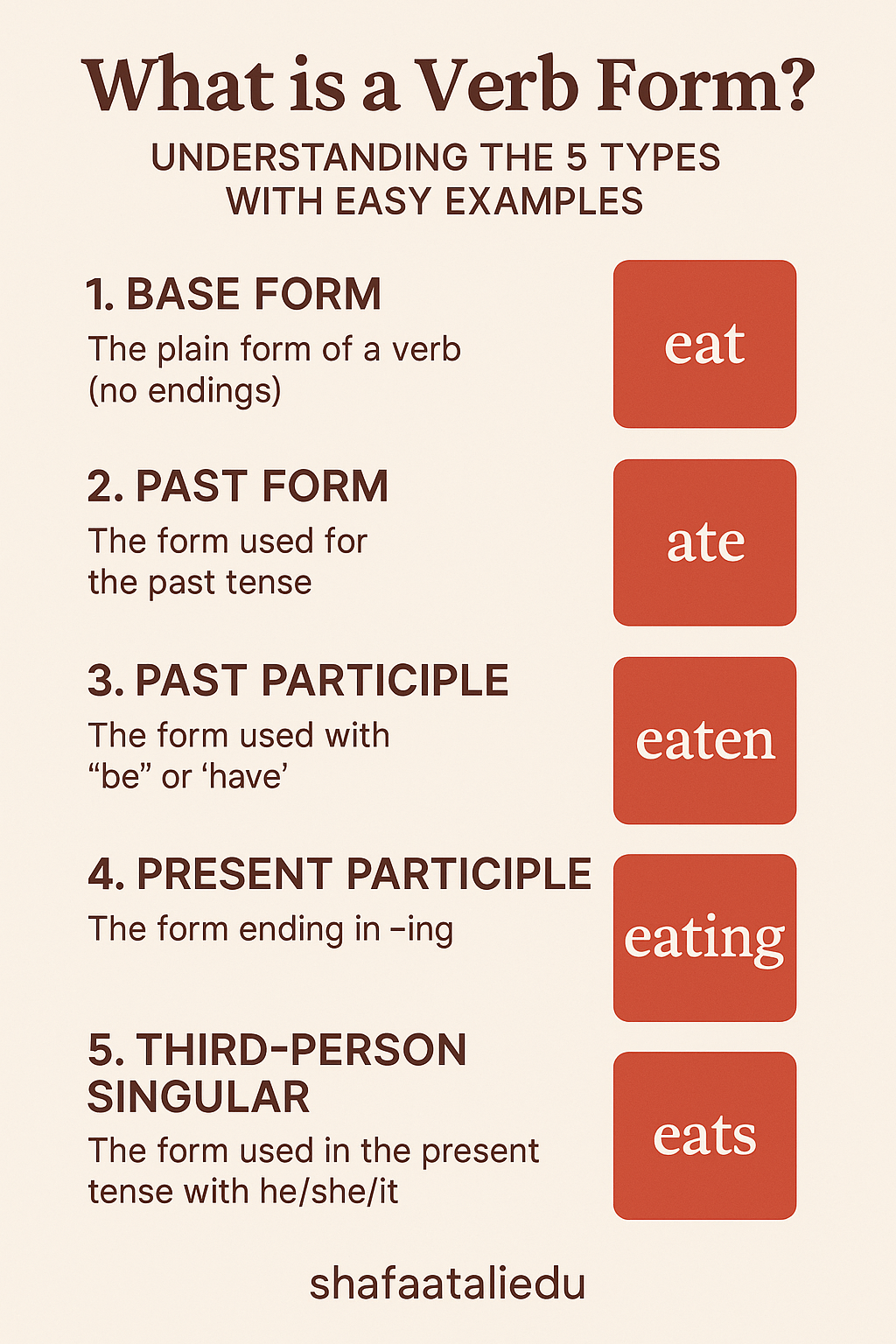
A verb form is simply the way a verb changes to show time (tense), person, number, or voice. Think of it like the different outfits a verb wears depending on the situation! Let’s break down the five main types of verb forms with examples to make it easy.
1. Base Form
This is the original, unmodified form of a verb. It’s what you’ll find in the dictionary.
Example: go, eat, play
Use: “I play soccer every weekend.”
2. Past Simple Form
Used to show actions completed in the past.
Example: went, ate, played
Use: “She went to the store yesterday.”
3. Past Participle
Often used with have, has, or had for perfect tenses.
Example: gone, eaten, played
Use: “They have eaten dinner already.”
💡Note: Regular verbs form this by adding -ed (like played), but irregular verbs (like eat → eaten) don’t follow the rule.
4. Present Participle (–ing form)
Shows ongoing actions or is used as a gerund.
Example: going, eating, playing
Use: “He is playing the guitar.”
5. Third Person Singular Present
Used when the subject is he, she, or it.
Example: goes, eats, plays
Use: “She eats breakfast at 8 AM.”
Final Thought:
Mastering verb forms helps you build clear, correct sentences. As you write or speak more English, you’ll start switching forms naturally—just like changing into the right outfit for the right occasion!


Leave a comment